Masa mare – nail of a Moldovan wedding
Masa Mare is literally translated from the Moldovan language as «large table». Not a single real Moldovan wedding takes place without this custom.
Every nation has many traditions and customs in preparing and holding a wedding. They are preserved and passed on from generation to generation, even if slightly modified. The custom of giving money and gifts to newlyweds on the day of their main celebration – of creating a new family has also reached us.
The same custom exists among many other peoples. For the Chinese, for example, on their wedding day it is customary to give household items and red envelopes with money. The Japanese present the newlyweds with expensive gifts, the cost of which is set by etiquette. Wedding gifts are usually wrapped in a special way – in the form of a fan. In addition, the bride and groom receive envelopes with money from the guests the day before the celebration. This custom is confidential; no one should know who and how much money put into the starting capital of young people.
Everyone literally walks around Cypriots on someone's wedding day. Anyone who gave money to the newlyweds in an envelope can taste food from this people's wedding table. Sometimes even guests do not know the bride and groom.
It is also customary for Poles to give money on wedding day. During the wedding, the following rite is performed: the bride and groom stand in the center of the circle that the guests form. The young husband takes the veil off the head of the other half, and the invitees throw money at them. With these financial gifts, the newlyweds must buy the gifts they like.
Moldovans have a wedding tradition of giving gifts and money stretching back to our ancestors. And if in the last century more attention was paid to gifts (given), then in recent years the scope of the Moldovan wedding has been judged by the number of banknotes collected. Sometimes even guests of Moldovan weddings are announced the cost of a festive table per person, thereby making it clear below what amount they should not be given to a young family.
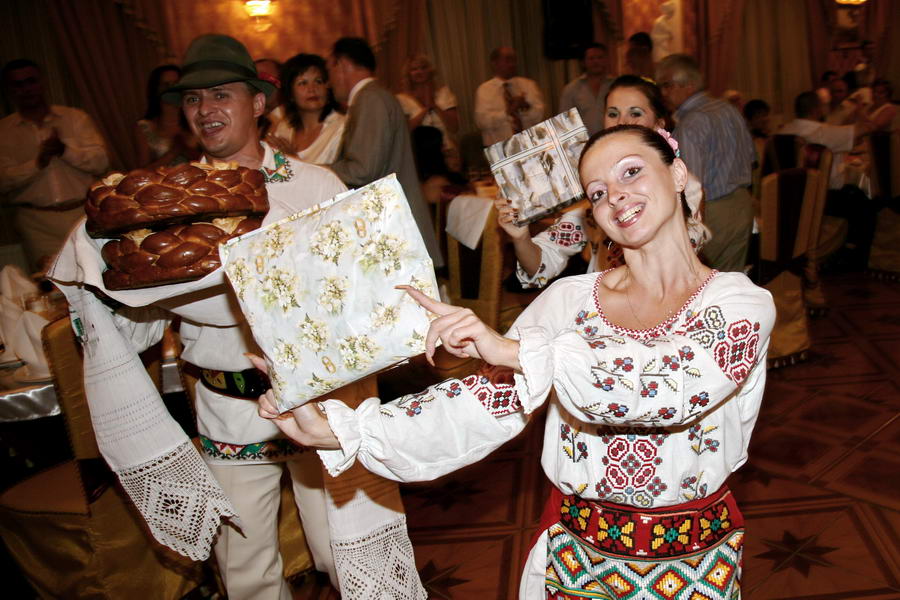
Looking at wedding photographs from the 60s and 80s, you can see what gifts the newlyweds received from relatives and friends at that time. From the stories of the newlyweds of the last century, it turned out that the bride arrived at the groom’s house with a dowry prepared for her by her parents. Long before the wedding, towels, bed linen, tablecloths, and embroidered curtains were folded into a special chest; blankets, pillows, mattresses, and clothes were sewn. Wealthier parents bought cabinets and beds, and in the 80s they stocked up on furniture sets (bedrooms, walls, hallways, kitchens). In the late 60s and early 70s, the wedding procession consisted of open trucks that transported pieces of furniture and household utensils from the bride’s house to the groom. In the bodies of the same cars were relatives and friends who danced right on the move to the sounds of national music, waving gifts (cushions, bedspreads, sets, household utensils, etc.) over their heads. All these gifts were given to the bride and groom at the wedding itself. Young relatives and friends danced with them in front of the table.
Currently, it is also customary to give gifts at Moldovan weddings. Basically, gifts are prepared by the parents of the newlyweds, our parents (planted parents) and closest relatives. Guests arrive at the wedding with a certain amount of money, which is given as seed money to the bride and groom during the custom of Masa mare.
Masa mare – is the nail of everyone moldavian wedding. This ritual is usually performed after midnight, when hot dishes have already been served on the festive tables. For the custom of collecting money, a container is prepared in advance. At some weddings, money is collected in miniature box houses, at others – in baskets, at others – in beautiful trays.
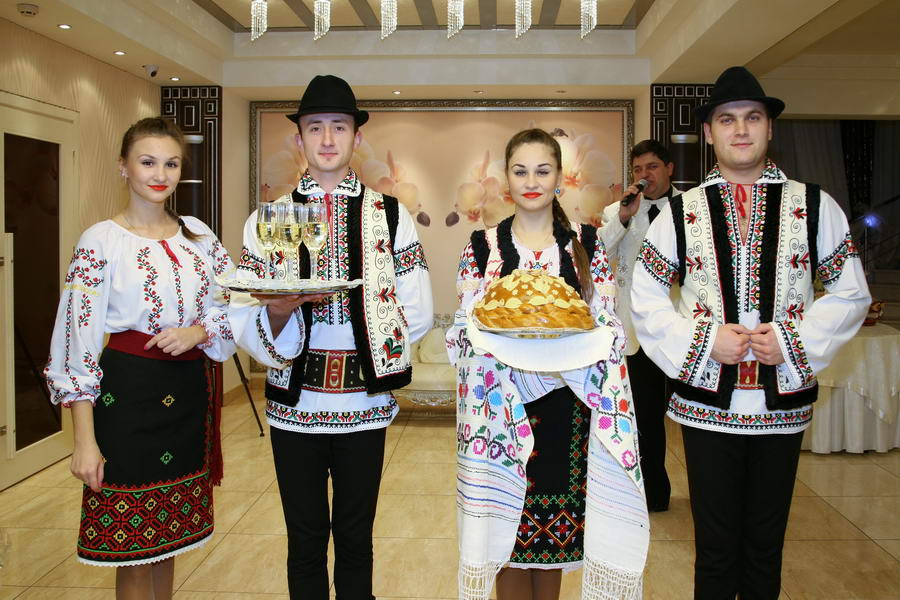
The collection of money is entrusted to ours. Before this custom, two pairs of dancers in national costumes bring out beautiful holiday rolls to the music, with which they dance in front of the bride and groom’s table. The little boy and girl then take out a water jug, a bowl and a towel.
Before starting to raise money, imprisoned parents should wash their hands. The newlyweds pour water on their hands. After this hygienic procedure, a basket is brought to our people to collect money. Before going around the hall for cash gifts for the heroes of the occasion, the imprisoned parents make a toast and wishes to the young people, and announce the amount of their financial contribution to the starting capital of the newly minted family. After this, nanashka picks up a house, our – glass of champagne, and witnesses pick up a tray with glasses and a jug of wine and begin to walk around the guests. There is also a toastmaster walking with everyone else, holding a plate of bread and salt in his hands. By the way, bread and salt are also placed at the bottom of the house to collect money.
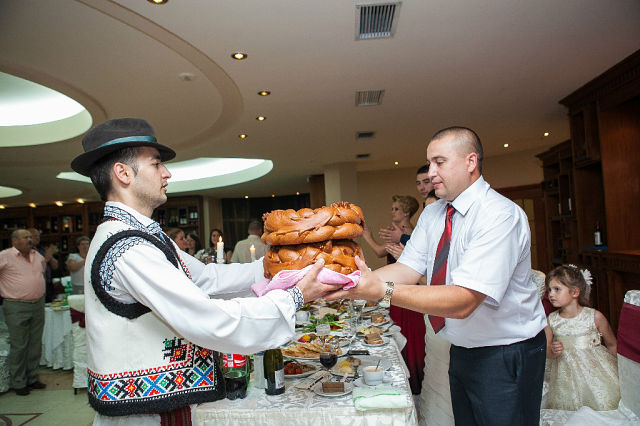
This delegation approaches each guest individually and provides him with the opportunity to congratulate the newlyweds. First, the invitees make a toast, then announce the amount they give to the bride and groom, put the envelope with money in the basket and ours offers to drink a glass of homemade wine for the health of the young.
If the toasters want to give the young people a musical gift, they must put a certain amount of money separately on the toastmaster tray plate and order a song. And so, moving from guest to guest, «financial» escort bypasses all invitees. This ritual takes at least an hour and a half. Previously, after the end of collecting money, our people retired to a separate room to calculate the amount collected and later publicly announce the amount of starting capital to young people. But recently, more and more often, the financial component of Masa’s custom has not been made public.
Another innovation has appeared recently at Moldovan weddings: each guest is placed under a plate with pre-ordered envelopes with the name of the invitee, where he puts the banknotes stored for the newlyweds and transfers them during the Masa Mare custom to the starting piggy bank of the bride and groom.
The time for gifts comes at the very end of the wedding, when the bride's undressing ceremony takes place. The young wife's veil is removed and her scarf is tied. A kitchen apron is tied over the wedding dress. A chair is installed in the center of the hall, on it is a — pillow on which the groom is seated, and on his lap is a — bride. Then the newlyweds begin to be given gifts: tied with towels, bedspreads, wardrobe items, etc. Nanashi mainly give expensive gifts: household appliances, table sets, crystal and various household items.
Some wealthy parents present their married children with the keys to a separate apartment, a trip to a romantic trip, a bank account, a share in the business and other surprises. But there are not many expensive weddings in Moldova, although the desire to give your best so as not to fall face down in the mud prevails in almost every Moldovan family. And fees during the custom of Masa mare, sometimes, do not even reimburse the funds invested in organizing this most important celebration of young people. But for those getting married, the most important holiday is that they will remember for the rest of their lives.