New Year is a holiday for all times and peoples. Although it is celebrated in each country at different times, adhering to its own national customs, a universal atmosphere of joy and happiness pervades everywhere. People around the world look to the future in anticipation of miracles and with hope for the best.
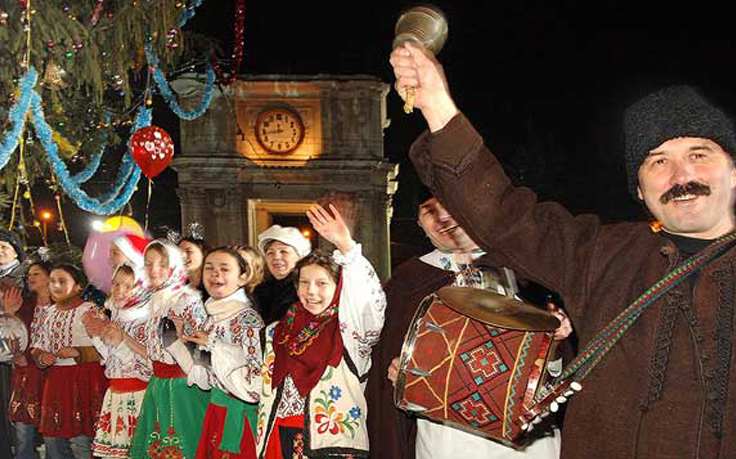
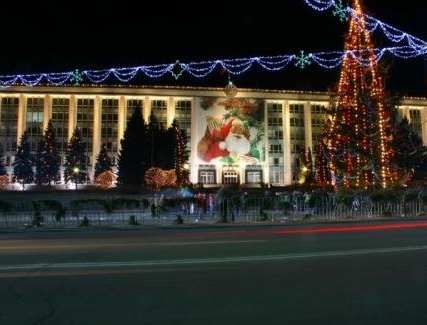
In Moldova, preparations for the New Year begin long before it arrives. The country's main Christmas tree is erected in the central square of the capital, Chisinau.
Chisinau's streets , trees, and storefronts are decorated with colorful, sparkling garlands. Every neighborhood opens the holiday season with fairs selling gifts, Christmas trees, and tinsel.
To bid farewell to the outgoing year, children's schools hold matinees, featuring Moş Krăciun (Father Frost) and Fata de Zăpadă (Snow Maiden). The evil Baba Hîrka (Baba Yaga) and her retinue try to disrupt the festivities.
At corporate events, which have become a tradition in recent years, the results of the year are summed up and the best employees are congratulated with bonuses.
In Moldova, New Year's is celebrated twice on the night of January 1st: once according to Moscow time, and an hour later according to local time. Family and friends gather around a hospitable table with all sorts of Moldovan delicacies , drink champagne at the chimes of the clock, make wishes for the coming year, and exchange gifts.
Fireworks bursts across the city streets herald the arrival of the New Year, and New Year's Eve continues with mass festivities.
The New Year holidays overlap with Christmas, and at this time it is customary to visit each other with congratulations, while observing the custom of scattering grain around the house as a sign of a bountiful harvest in the future.
Children go from house to house singing carols, wishing their owners happiness and prosperity, and in return receive sweets.
The winter festivities in Moldova conclude with the Old New Year celebration, which is not an official holiday. It is celebrated with special preparations.
Traditionally, twelve national dishes are set on the table , with kolivo (kutia) and kalach placed in the center.
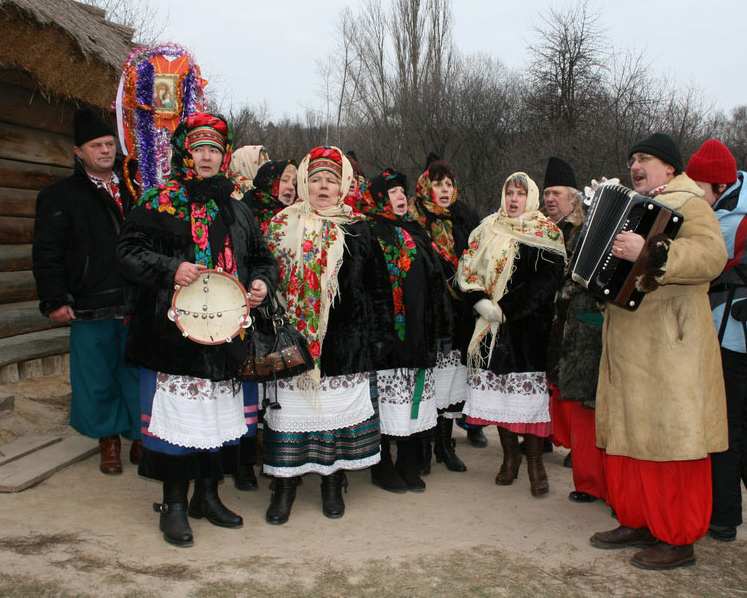
In rural areas, the custom of receiving congratulations on New Year's Eve from mummers who go from house to house has been preserved.
They are led by a man dressed as a goat. He wears horns on his head and a sheepskin coat turned inside out. The goat represents evil spirits, jumping around passersby, frightening them. Another man carries a traditional instrument, called a bugai, specially made for this holiday. The others ring bells. The carolers receive specially made krechuni (braids made of yeast dough) from the hands of their housewives.