People of different nationalities and different religions live on the relatively small territory of Moldovan land.
But at its core, Moldova is traditionally considered an Orthodox country, and the main holiday of believers is Easter.
It is symbolic that it is always celebrated in the spring and, along with the awakening of nature, unites people with a desire for holiness and renewal of the soul.
Preparations for the holiday begin well in advance. Men leave all their work and tidy up the household.
Women clean houses, scrub, wash, and also cook a variety of foods according to their own special recipes .
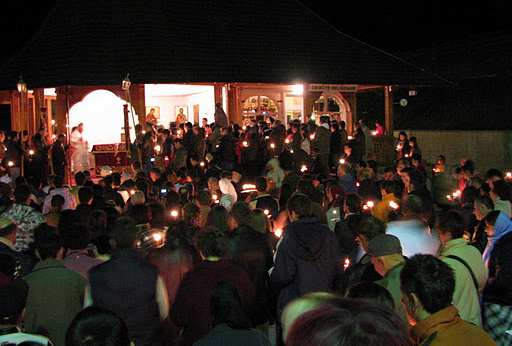
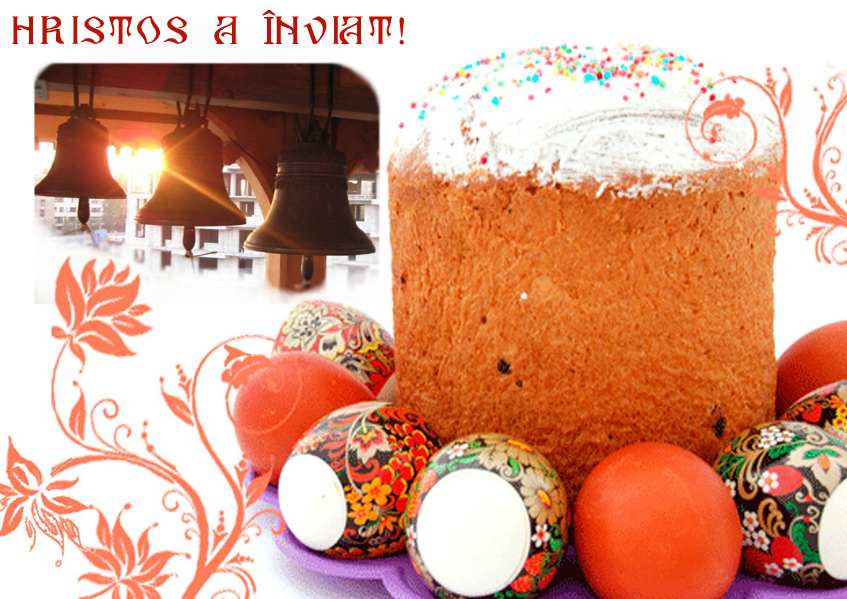
All of them are required to dye boiled chicken eggs, mostly red, and bake Easter cakes and so-called paskas, which will be blessed at a church service on the eve of the Great Feast on the night from Saturday to Sunday.
History of the holiday
The sacred holiday of Passover arose even before the birth of Jesus Christ. It was celebrated to commemorate the liberation of the Jewish people from Egyptian slavery. According to biblical tradition, the Jews were forcibly held in Egypt for 430 years until they were rescued by the prophet and founder of Judaism, Moses.
One day, God appeared to Moses in the form of a blazing but unburnt bush. The Lord commanded the shepherd to come to the land of Egypt and persuade the Pharaoh to release the Israelites. At the age of 80, the prophet appeared before the ruler of Egypt, but no matter how hard he tried to reason with the Pharaoh, the Israelites remained in slavery. As punishment, the Lord sent ten plagues upon Egypt: the plague of blood, a plague of frogs, a plague of bloodsucking insects, a plague of dog flies, a plague of cattle, plagues and boils, thunder and fiery hail, a plague of locusts, the darkness of Egypt, and finally, the death of the firstborn.
Neither frogs, nor rivers of blood, nor hail of fire frightened Pharaoh. Only the death of his own child forced the ruler to release the Jews. Not everyone suffered this terrible punishment: Moses warned the Israelites that the doors of their homes were to be marked with the blood of a one-year-old, unblemished lamb, and that the animal itself was to be roasted and eaten by the family. Those Jewish homes that complied with Moses' command were untouched by death.
When the Israelites approached the Red Sea, the waters opened up and the Jews walked along the bottom.
Following these events, the holiday of Passover, also known as Easter, emerged. It literally translates from Hebrew as "passed by, passed by." This is a direct reference to the Jews' passage through the waters of the Red Sea.
Connection with Christian Easter
Easter is inextricably linked with the life, death, and resurrection of the Son of God, Jesus. Christ was born in the small village of Nazareth, near Bethlehem. When he was 30, he was baptized in the Jordan River by John the Baptist. Three years later, Jesus gathered 12 of his closest disciples for a Passover feast, telling them that one of them would soon betray him, thus foreshadowing Judas's betrayal.
The day after the Last Supper, Pontius Pilate, the Roman prefect of Judea, ordered Christ's arrest, torture, and crucifixion. The priests envied the Son of God, for crowds of believers followed him, and the authorities wanted to eradicate Christianity at its roots. After being scourged and "crowned" with a crown of thorns, the exhausted Jesus shouldered the cross and carried it to the top of Mount Golgotha. Jesus's way of the cross through old Jerusalem and the serpentine mountain became one of the prototypes of the Christian procession.
The death of the Son of God on Mount Golgotha is a peculiar allegory for the slaughter of sacrificial lambs. Just as the Jews sacrificed yearling, unblemished lambs, so Jesus gave his life for the remission of sins and the purification of human souls. Christ died after the Jewish Passover, on the Friday known as Holy Friday.
Why do we dye eggs for Easter?
On Sunday, the third day after Christ's burial, Mary Magdalene, one of Jesus' followers, went to his tomb with the myrrh-bearing women to leave perfume. Approaching the cave, she saw the stone rolled away, and an Angel of the Lord sitting in the cave, robed in pure white. The angel told Mary that Jesus was not in the tomb—he had risen. At that moment, the Son of God himself appeared before her. Overjoyed, Mary hastened to share the good news with Emperor Tiberius himself. Entry to the great Roman pontiff was forbidden without a gift, so Mary took with her a symbol of life—an egg. Upon hearing of Christ's resurrection, Tiberius laughed and said he would believe it only when the egg in Mary's hands turned red. Immediately, the eggshell turned crimson, symbolizing the shed blood of Christ.
However, the spiritual writer and Bishop Dmitry of Rostov believed that Mary Magdalene gave the emperor an egg already dyed red. This gift aroused the emperor's curiosity, and she told him about Jesus Christ, after which he became a believer. This legend, apparently, entered Orthodoxy under the influence of Catholicism.
According to another version, the Virgin Mary, the mother of Jesus, entertained Christ with painted eggs when he was a baby.
What happens in churches on Holy Saturday?
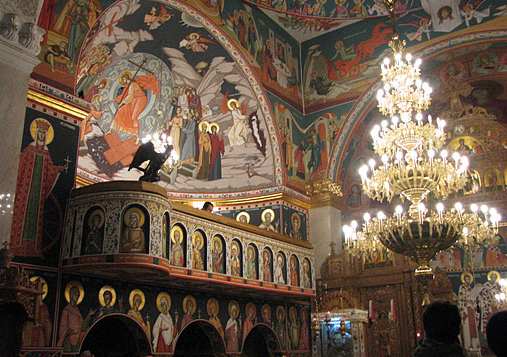
As a sign that Christ's body remains in the tomb on Holy Saturday, the Shroud—an embroidered image of the buried Jesus, an icon on cloth—is placed in the center of churches on this day. The Shroud was brought to the center of the church the day before, on Good Friday, and will remain there until midnight on Sunday, reminding us that Jesus's body remains in the tomb throughout this entire time. On Holy Saturday, the Liturgy of Basil the Great is celebrated (it is celebrated only a few times a year), during which biblical prophecies are read before the Shroud.
As is well known, long before the birth of the God-Man, the prophets foretold the coming of the Savior into our world and that through His death on the cross and His Resurrection He would redeem us from the power of sin and death. During the Divine Liturgy on Holy Saturday, there is a remarkable moment: the priests change from black to white vestments.
This symbolizes that "Christ is risen from the dead, trampling down death by death and bestowing life on those in the tombs." The meaning of this hymn, sung in churches on Easter, is as follows: By His sacrifice on the cross and death, and then by His Resurrection following that death, the Lord transformed human nature and opened the path of resurrection to all people. This means that from now on there is no room for mourning in the world.
Easter meal
The Easter meal in Moldova is traditionally a bountiful one , as entire families gather around the table during these days, and all homes are open to guests. The law of hospitality obliges generous hosts to welcome everyone, feed them, and provide them with drink.
Throughout the first week of Easter, it is customary to greet each other with the words "Hristos a inviat - Christ is risen," and in response to say "Adevarat a inviat - He is risen indeed," and loved ones exchange a three-fold kiss.
Easter traditions in Moldova
In Moldova, Easter is celebrated for two days – Sunday and the following Monday, which are considered non-working days.
On Maundy Thursday before Easter, it's customary to do a thorough cleaning of apartments, houses, and yards. In preparation for the holiday, eggs are hard-boiled and dyed in advance, and two days before Easter, on Good Friday, kulich (Easter cakes) and paskas (paskas) are baked.
Easter celebrations begin on Sunday night, when believers attend church and have kulich, paska, and dyed eggs blessed. In the morning, family and friends gather around the Easter table, joyfully exclaiming "Christ is risen" ("Hristos a inviat") and responding "Truly He is risen" ("Adevarat a inviat"), as they begin the morning meal, the so-called breaking of the fast after the great seven-week fast.
In addition to traditional painted eggs and paskas (kulich), Easter dishes in Moldova also include kulich with cottage cheese, jambon (ham) in dough baked in the oven, resol (rooster aspic), and the famous Moldovan wine.
The only time a year children can allow themselves to break painted eggs, and entire mini-tournaments are organized by knocking them together.
For the remaining two days of the holiday, Moldovans relax and visit friends, and if the weather is favorable, they go out into nature for the first spring picnics.
The following Monday has been declared a non-working day. It is traditionally called Parents' Day (Radonitsa), when it is customary to commemorate all the departed.
He is revered by all residents of Moldova, regardless of religion. In the capital, Chisinau, the city authorities provide free transportation between the cemetery and neighborhoods.
Large numbers of people, flowers in hand, come to pay their respects at the graves. As a tribute to the dead, the poor are given "pomana"—Easter food.
Then the relatives gather in their parents' home, where they drink a glass of red homemade wine in a heartfelt conversation for the repose of the souls of their loved ones, remembering their good deeds.