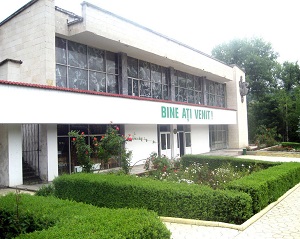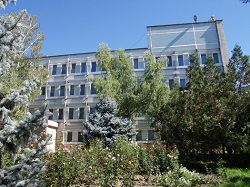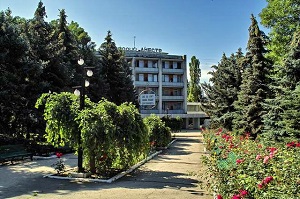
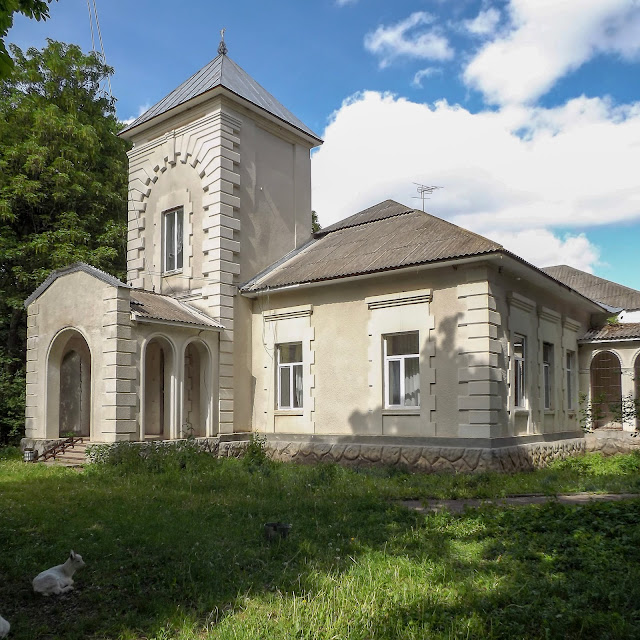
This estate was the main reason I came to the Briceni region. I began planning my route around it, which eventually became a full-fledged tour.
About the village of Pavlovka
Pavlovka is a tiny village on the border with Ukraine. It has just a few houses and fewer than ten residents. It's home to former employees of the medical facility that operated on the grounds of the former Krupensky estate until 2014. It treated patients with tuberculosis, mental illness, and alcoholics.
It's funny that Lyubov Melnitskaya, with whom I started talking about these places, called me "cute"—she's got experience, what can you say. She's seen her share of crazy people. But she doesn't complain about her life. It's just a shame that the place, which could have been a sanatorium, a resort, or some other recreational facility, is so run-down.
The estate was founded in the late 19th and early 20th centuries. It served as a summer cottage for its owner and included a house, two outbuildings, a storeroom, and a landscaped park. There was no provision for heating. P.M. Krupenskoy, a descendant of a noble boyar family, served as a diplomat and ambassador to England. The estate buildings were constructed in the late 19th century, and the park was established in the early 20th century. The manor house has been rebuilt, and the watchtower no longer exists.
The estate and park in Pavlovka exemplify the fusion of residential space with an artificially created natural environment. The park is one of Moldova's most valuable landscape architecture sites, a nature reserve and protected by the state.
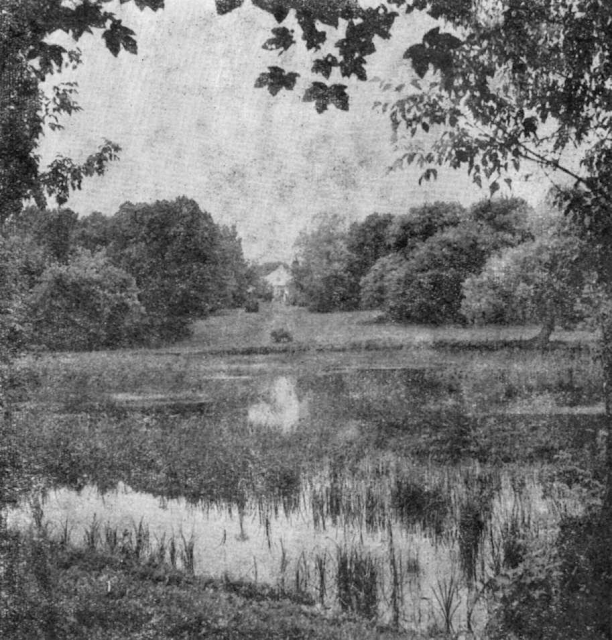
The main house was built in the late 19th century from brick and ragged stone in the style of English manor architecture. Only part of the house remains today. There was also an attic—a key part of the house, where celebrations were held. It overlooked a landscaped park with a pond.
The outbuildings are separate from the main house and hidden behind trees. They are simple in layout and materials, like the main house.
A plan of a manor park in the Moldovan village of Pavlovka
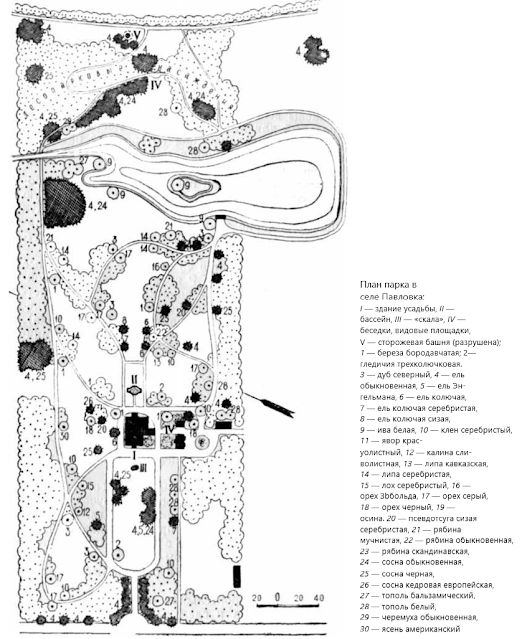
The park was established in 1900. A dam was built on the stream, and the main part was planted. The plan divides the park into a park zone and a forested park zone. The park zone contains a pond, an estate, and parkland. The forested park zone is located behind the pond and is densely planted to protect the park.
At the beginning of the park was an alley leading to the house, lined with spruce trees. They formed a frame for the house. The roads gently curved around the pond, trees, and meadows. They were slightly recessed into the ground so as not to disrupt the natural integrity of the park's composition. At the end of the park opposite the house, a guard tower (now destroyed) completed the composition.
A view from across the pond onto the estate in the park of the village of Pavlovka
Present day