If we move north-east from Chisinau, our gaze will be drawn to the unique historical and archaeological complex of Old Orhei.
These are the remains of settlements of various civilizations – an open-air museum.
Story
Orhei means "fortification," the name given to the first city founded on this site, subsequently destroyed and rebuilt a hundred times. Naturally, ancient people used natural barriers to protect their homes from enemies. Archaeological excavations in the mid-20th century prove that a Thracian settlement existed here as early as the first half of the first millennium BC, as well as a Getic fortress (5th-3rd centuries BC), the remains of which were discovered at the very edge of a high plateau. The fortress was protected by a system of moats and ramparts extending from the steep cliff face to the opposite bank of the Raut River. This type of fortification became known as the "Dacian wall."
The site of Old Orhei is an excellent natural fortification, hidden in the folds of the terrain and surrounded by water on three sides. Who founded the first settlement here and when is unknown, but archaeological finds indicate that Thracian tribes (Getae and Dacians) settled here between the 6th and 1st centuries BC. The city's history can be traced in more detail and with greater certainty only from the 1320s (during the reign of the Golden Horde).
Three main historical periods of Old Orhei:
The pre-Golden Horde period (12th–13th centuries) was a time when a completely different settlement, surrounded by wooden fortifications, stood on the site of Old Orhei. It didn't survive for very long, and was presumably destroyed by Tatar-Mongol invaders in 1241–1242.
The Golden Horde period (1330–1360s) – after the Golden Horde invasion, a new city was founded here (around 1330), named Yangi Shekhir. During excavations, archaeologists discovered buildings typical of Golden Horde cities – caravanserais, mausoleums, public baths, and a mosque.
The Moldavian period (1360s – second half of the 17th century) saw the Golden Horde finally abandon these lands, and the young Moldavian Principality founded its first settlement here, naming it Orhei (translated as "fortress" or "fortification"). Over time, the old fortifications were restored and new ones were erected, but after an attack by the Crimean Tatars (in the 15th–16th centuries) and Turkish troops in 1538, Orhei was destroyed again. As a result, in the mid-16th century, the city was forced to move northwest, to the site of today's Orhei.
Excavations at the Orhei Vechi cultural and natural complex began in the 1940s, and in the 1970s, a small but highly revealing museum of finds was opened – featuring priceless artifacts from the Paleolithic, Bronze Age, the period 4,000–3,000 BC, and more.
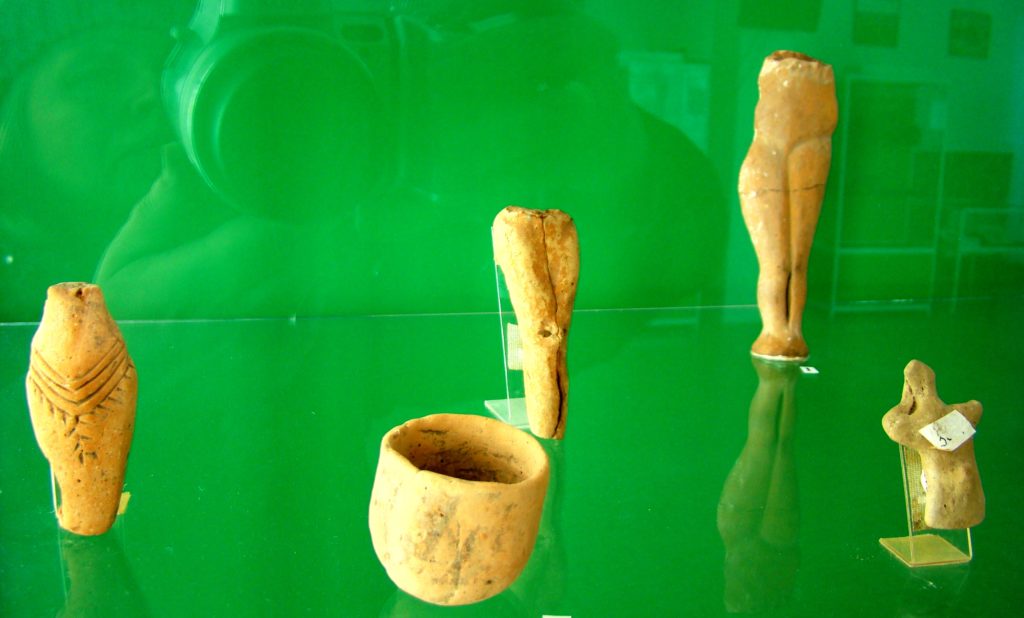
The display cases contain fragments of Getic and Greek ceramic vessels, fragments of spindles, bricks with the mark of a Greek potter, bronze three-bladed arrowheads of the Scythian type, an iron akinakes sword, rings, knives, bones of domestic and wild animals, worked stones, and more. Various coins and coin boxes were also found. Of particular interest are the anthropomorphic figurines—the "Orchean Venuses"—as well as relics of life during the Golden Horde in the form of worn shards and fragments.
A layering of different eras, as well as the remains of two medieval cities, Orhei and Sheikhr al-Jedid, the complex is located in a rocky gorge of the Reut River, reaching depths of up to 200 meters.
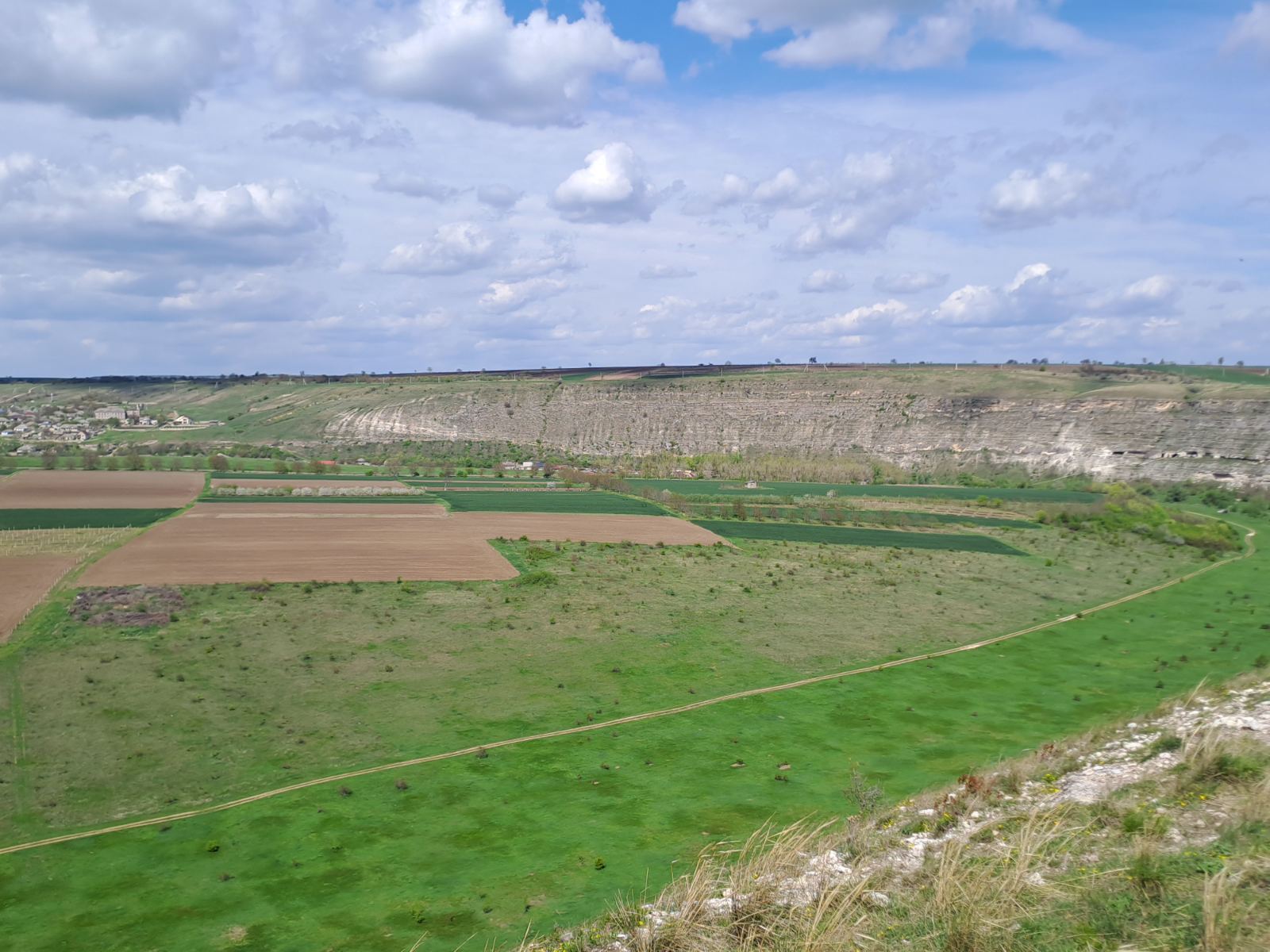
Inside the caves, one can sense the atmosphere of the first human settlements, dating back several hundred thousand years. Later, a Geto-Danish fortress (5th-3rd century BC) stood on the rocky summit, the ancestors of today's indigenous inhabitants of Moldova.
On the opposite bank you can see the ruins of the New City of the Golden Horde, the city was called, as you may have guessed, Sheikh al-Jedid.
This place is a melting pot of several civilizations from different eras. Historical scholars have recognized this city as the Golden Horde's capital, one of the capitals of the Tatar hordes. After the liberation of this area by Moldavian warriors, the Orhei fortress was built in the 15th century. Remains of its foundations can still be seen today.
The main finds of Old Orhei:
the remains of a Geto-Dacian fortress built before our era;
medieval settlement between the villages of Trebuzheni and Butucheni;
foundations of churches and cave Orthodox monasteries;
ruins of mosques, baths, caravanserais and other buildings from the time of the Golden Horde;
as well as coins, ceramic and metal items, jewelry and other ancient items.
The historical and archaeological complex of Old Orhei has the following main attractions:
- medieval Old Orhei, a real open-air museum, a whole city
- panorama of the narrow Raut River
- cave complex
- cave monastery "Assumption of the Mother of God"
- natural caves and fortresses
- Bosie Monastery
The Rock Monastery of the Dormition of the Mother of God
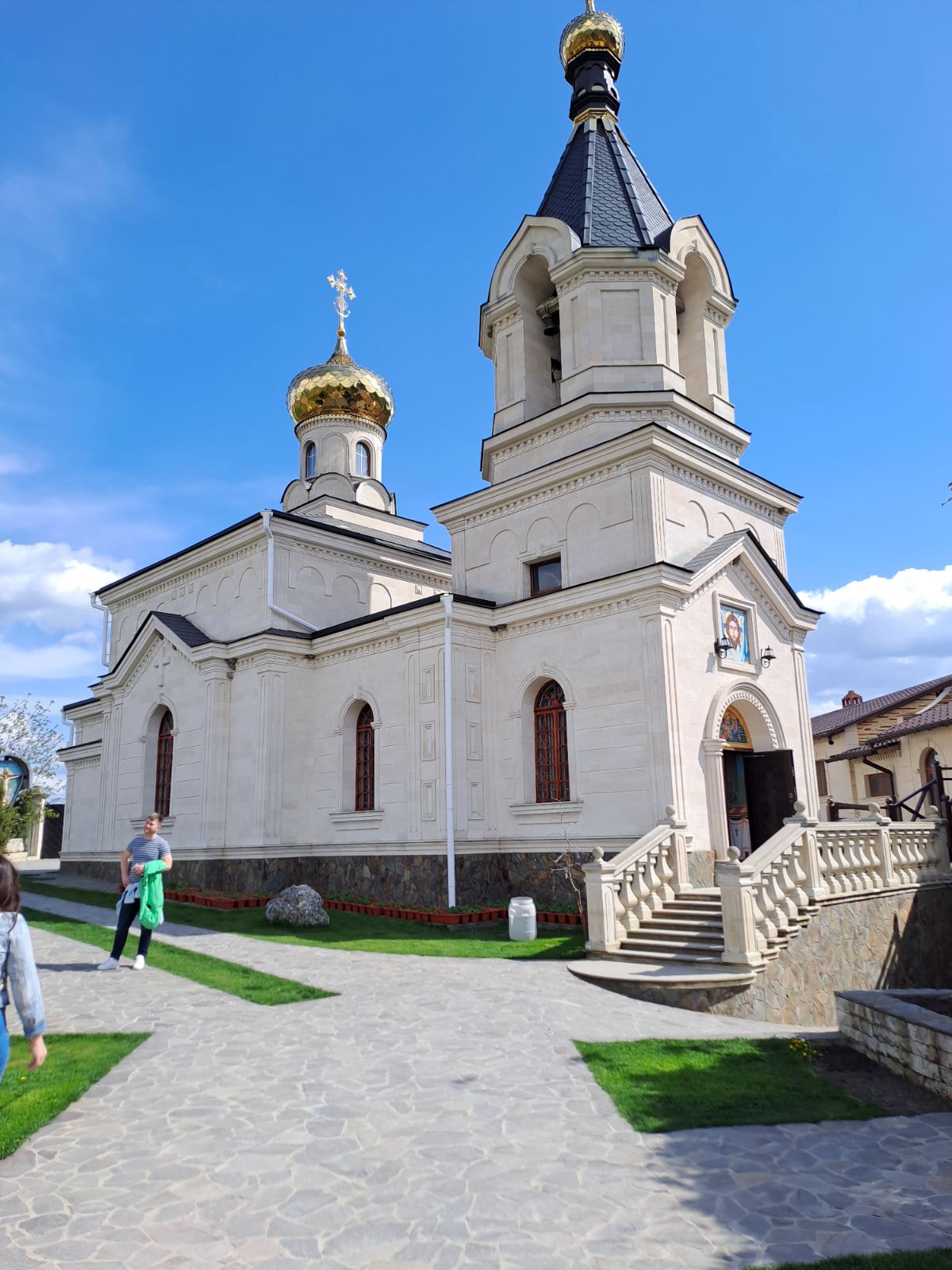
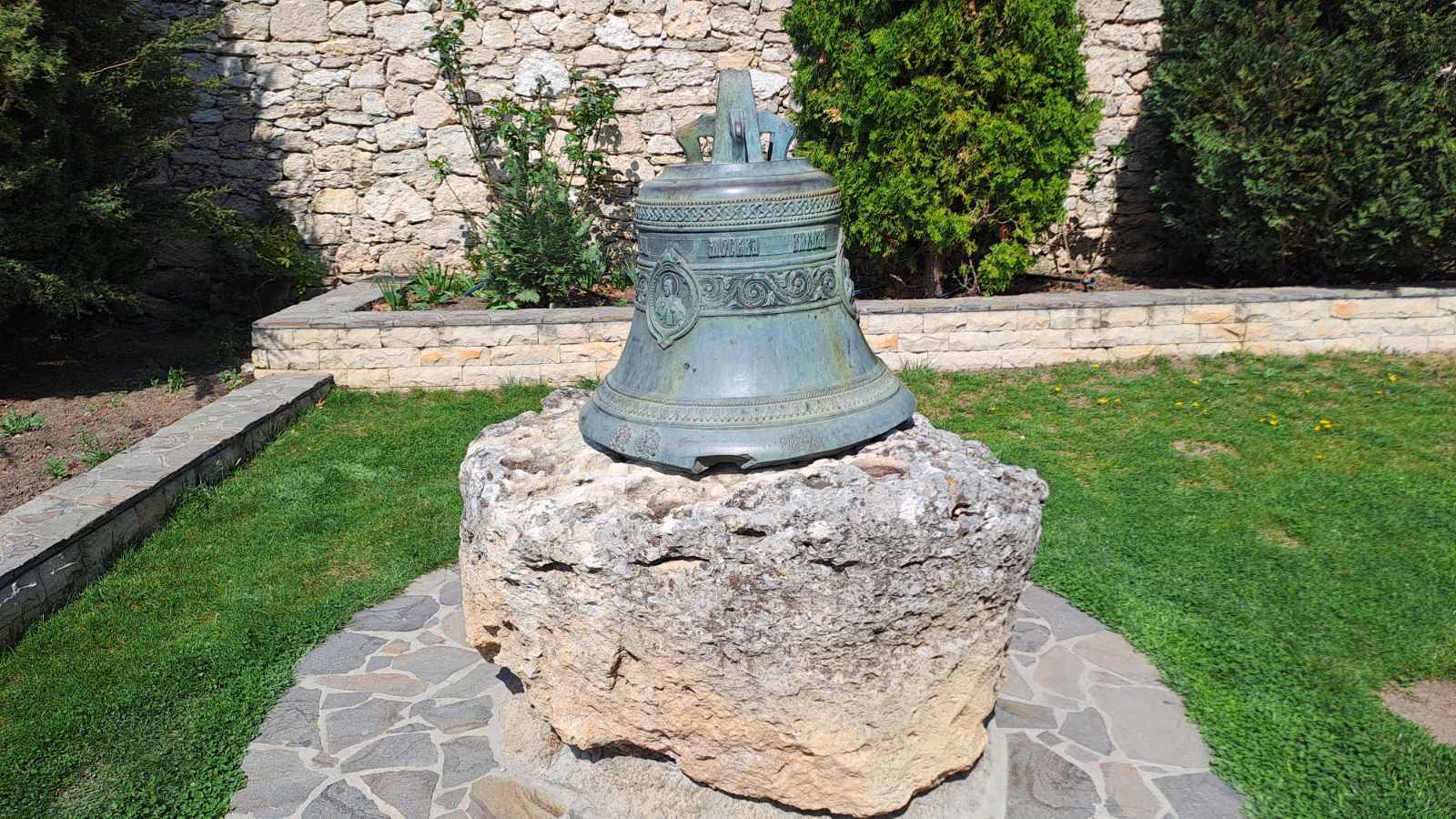
Another of the complex's attractions is the rock-cut monastery of the Dormition of the Mother of God (circa 12th century). Today, the monastery is open to tourists.
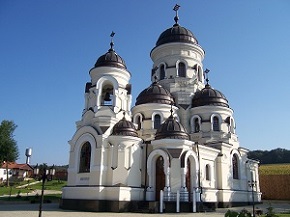
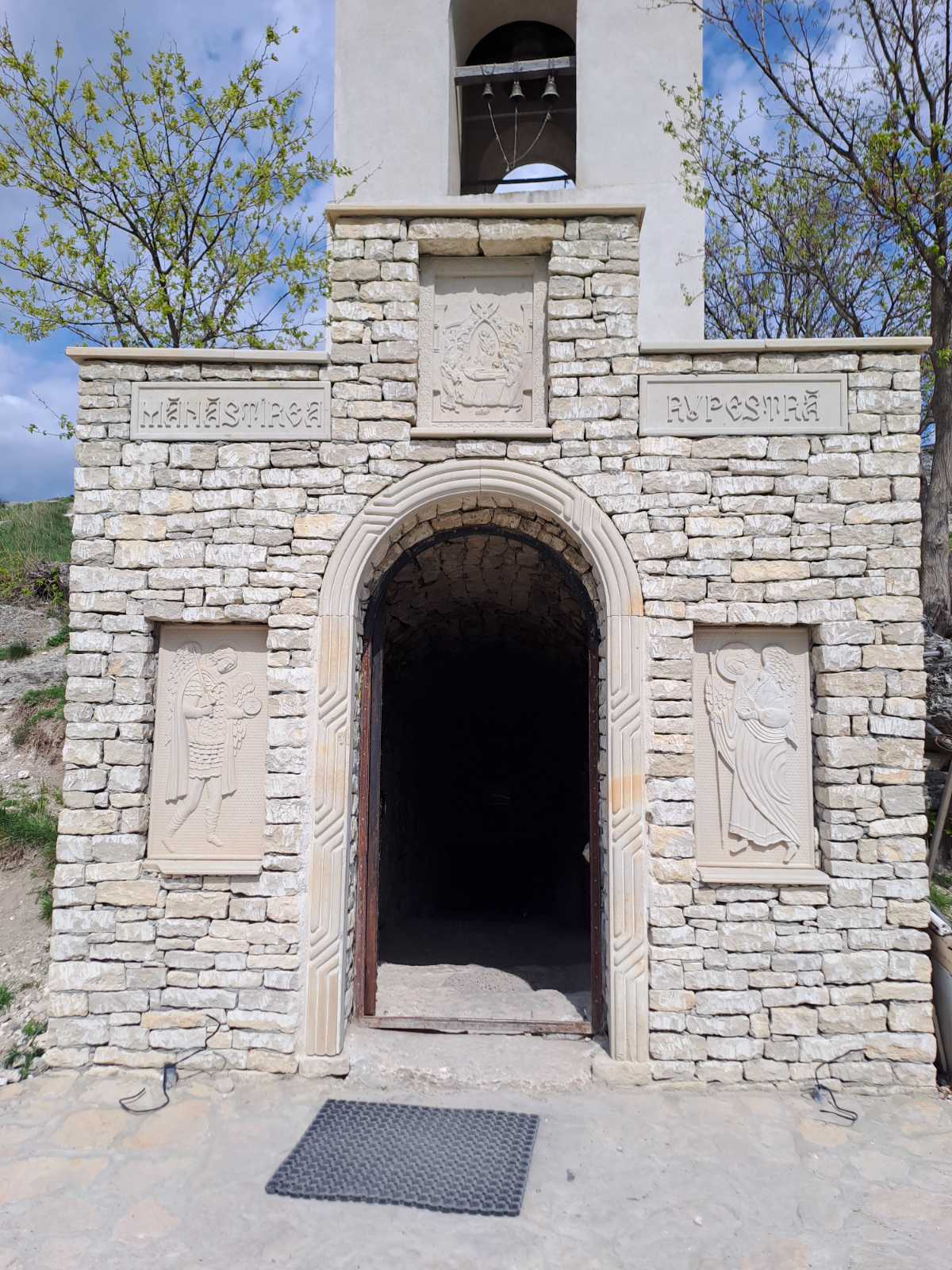
The bell tower of the Peshtere rock monastery
In the center of the village of Butuceni, on the highest part of the hill, two dominant religious buildings stand out: the bell tower of the Peshtere rock monastery and the distant church built in 1903. Tourists and pilgrims enjoy strolling along the so-called "tongue"—a raised area between the villages and the two churches, offering stunning views. It is the most visited holy site in Moldova.
The Butucheni Monastery, carved into the limestone wall on the Rauta cliff, began as 9th-century rock hermitages. Since the Middle Ages, the Church of the Dormition of the Mother of God has stood here, enclosing the ascetic cells separated by stone partitions.
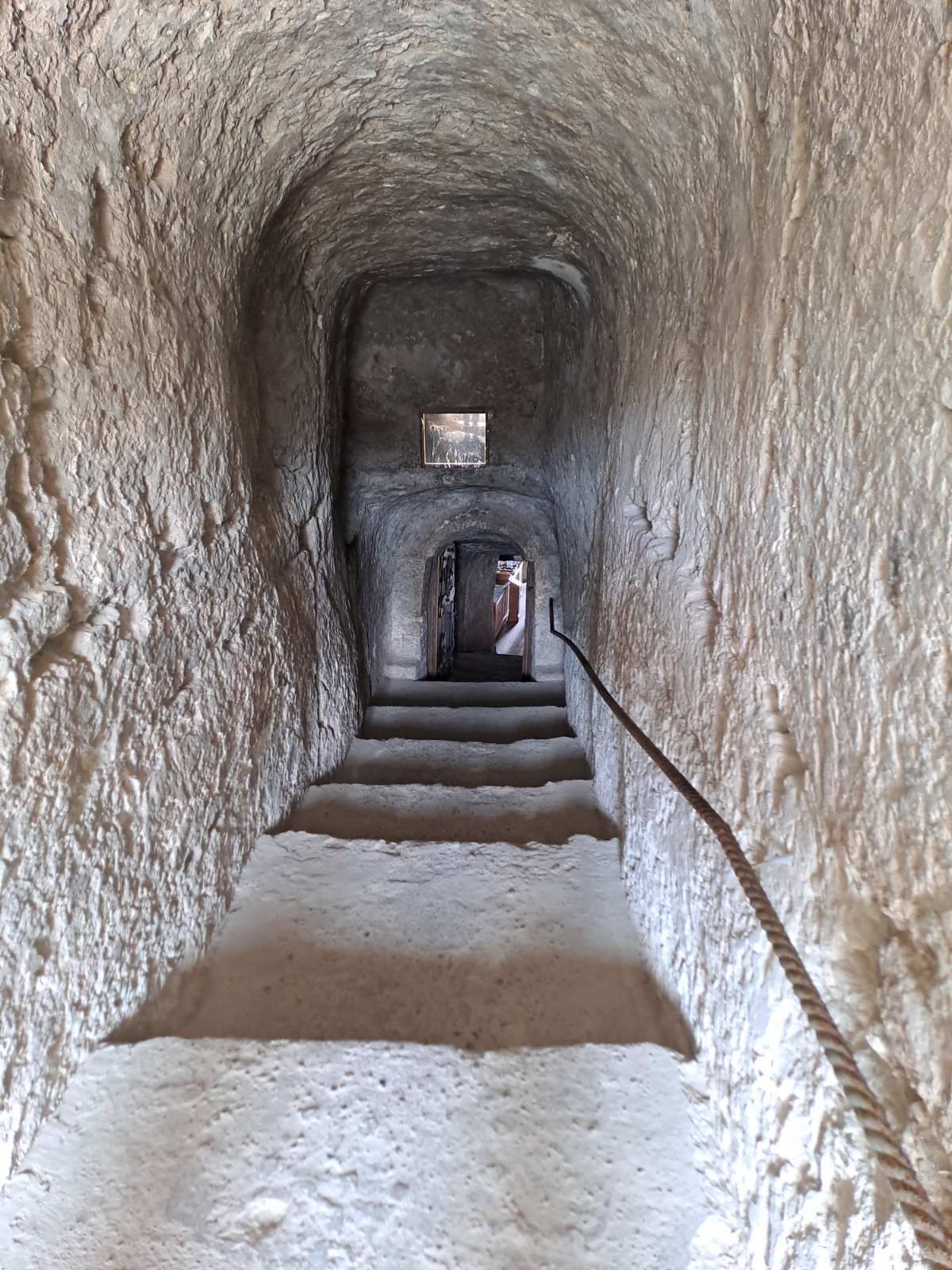
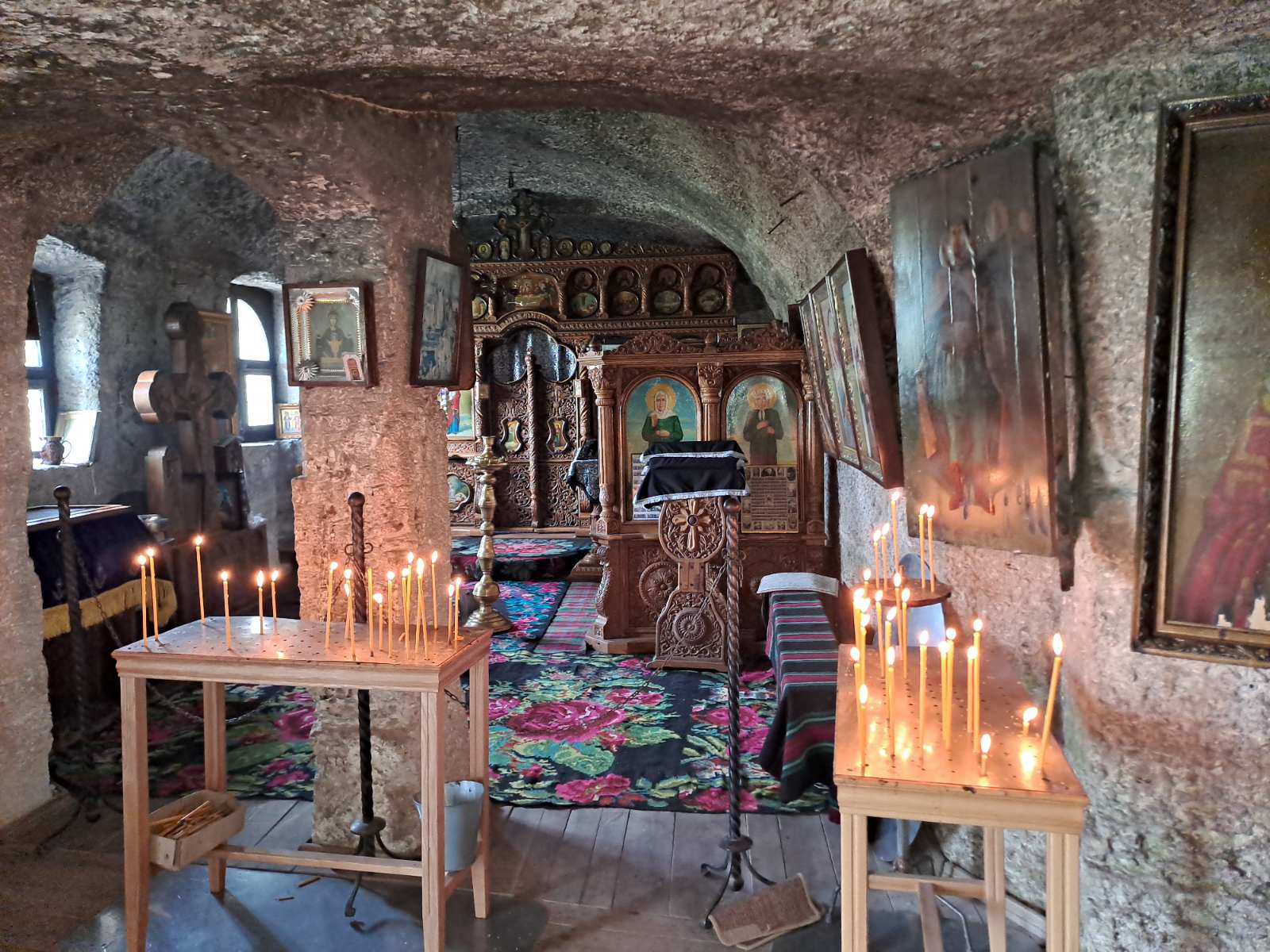
The monastery's entrance was once located on the river side. Steps were carved into the rock. These collapsed in the early 18th century, and then people dug a corridor through the rock from the village side—long and dark, like a mine shaft. A small bell tower on the hill today marks the entrance to the ancient rock church, and the dim flickering light of candles ahead guides parishioners. The church is quite small, the decor modest, but the atmosphere is inexplicably blissful. There is a sense of God here.
This monastery is staffed by just one monk, almost saintly in his detachment. At least, that's what he looks like, but he's also very friendly; he welcomes tourists, interacts with them, and sometimes offers philosophical advice.
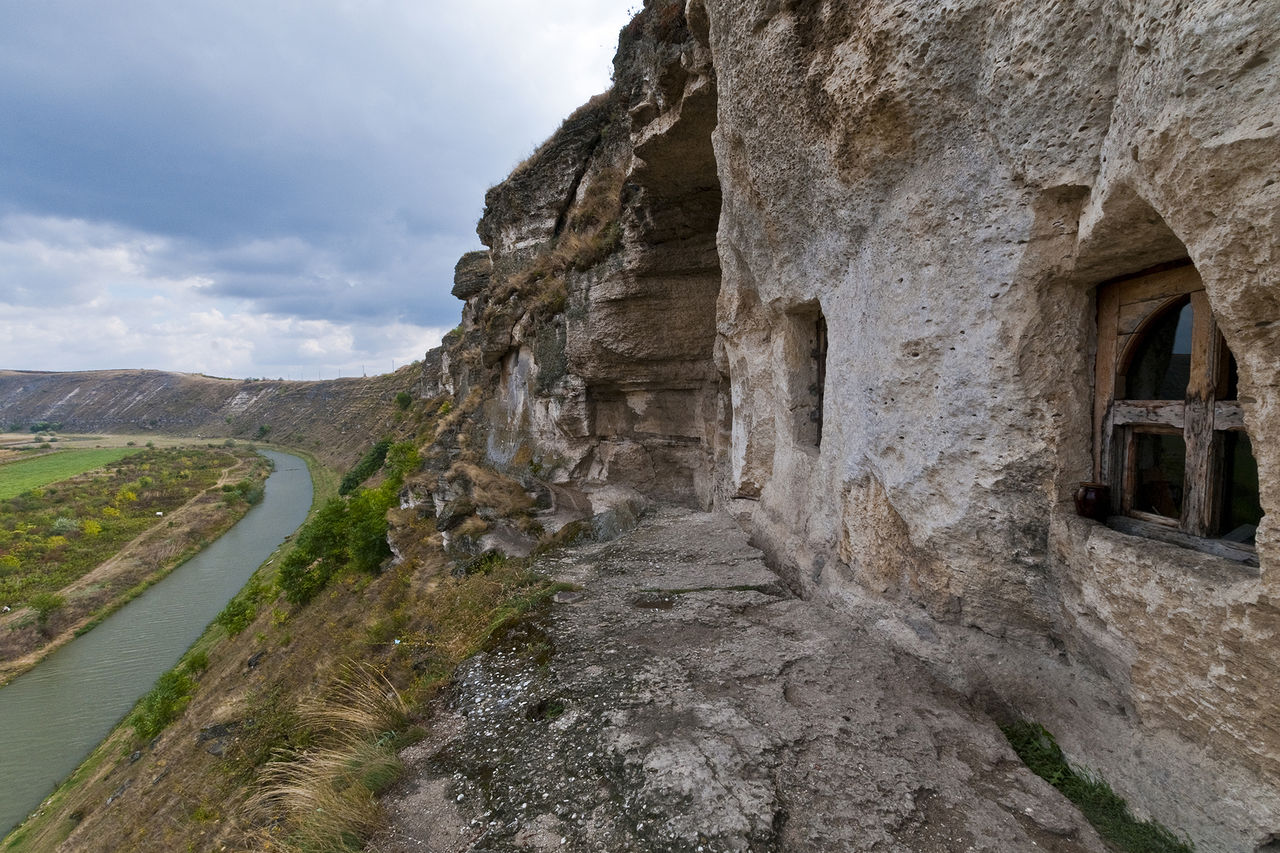
The church has an exit to a terrace above Reut—the remains of that same collapsed staircase. It may not be entirely safe, but it's thrillingly beautiful! However, for a full view of the surroundings, it's best to climb to the top of the hill after leaving the holy monastery.
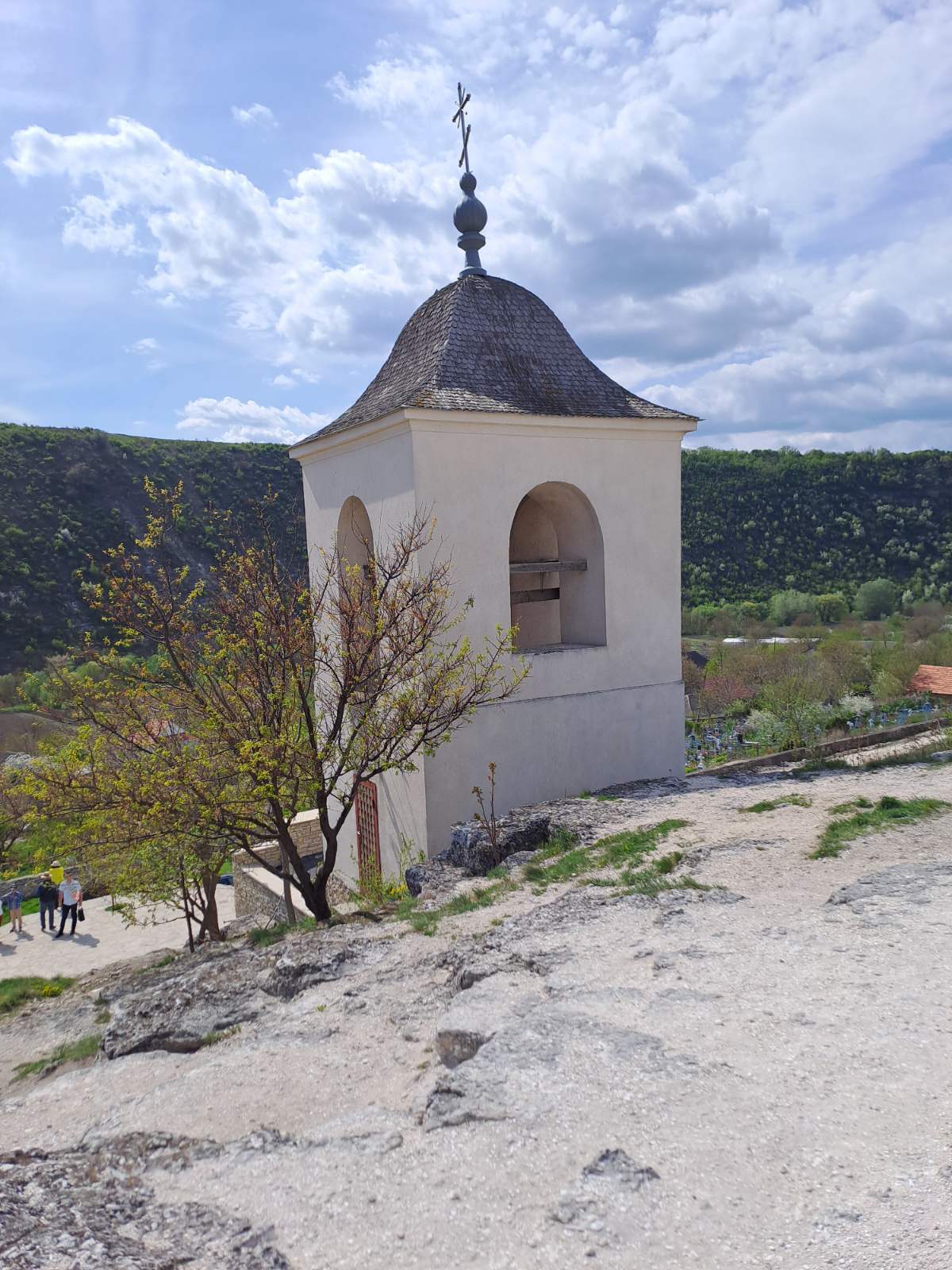
After going around the bell tower and going down, you come to the entrance to the grotto.
 Once inside and through a dark passage, you find yourself in a rock monastery cell.
Next, go out onto the balcony of the rock ledge.
Also near the monastery chapel there is another attraction, the "Cross".
At the edge of a steep cape stands a stone cross, erected in the 18th century to replace a decayed wooden one. A six-pointed flower is carved into its center, symbolizing the spiritual strength and heart of the Moldovan people. This symbol is well known throughout the Orthodox world, as it is depicted in many Byzantine frescoes and even on the cast-iron floor of St. Sophia Cathedral in Kyiv. It is said that placing your palm on the cross and praying will open the door to a happy life.
According to legend, if you walk around the Cross three times clockwise and make a wish, it will certainly come true.
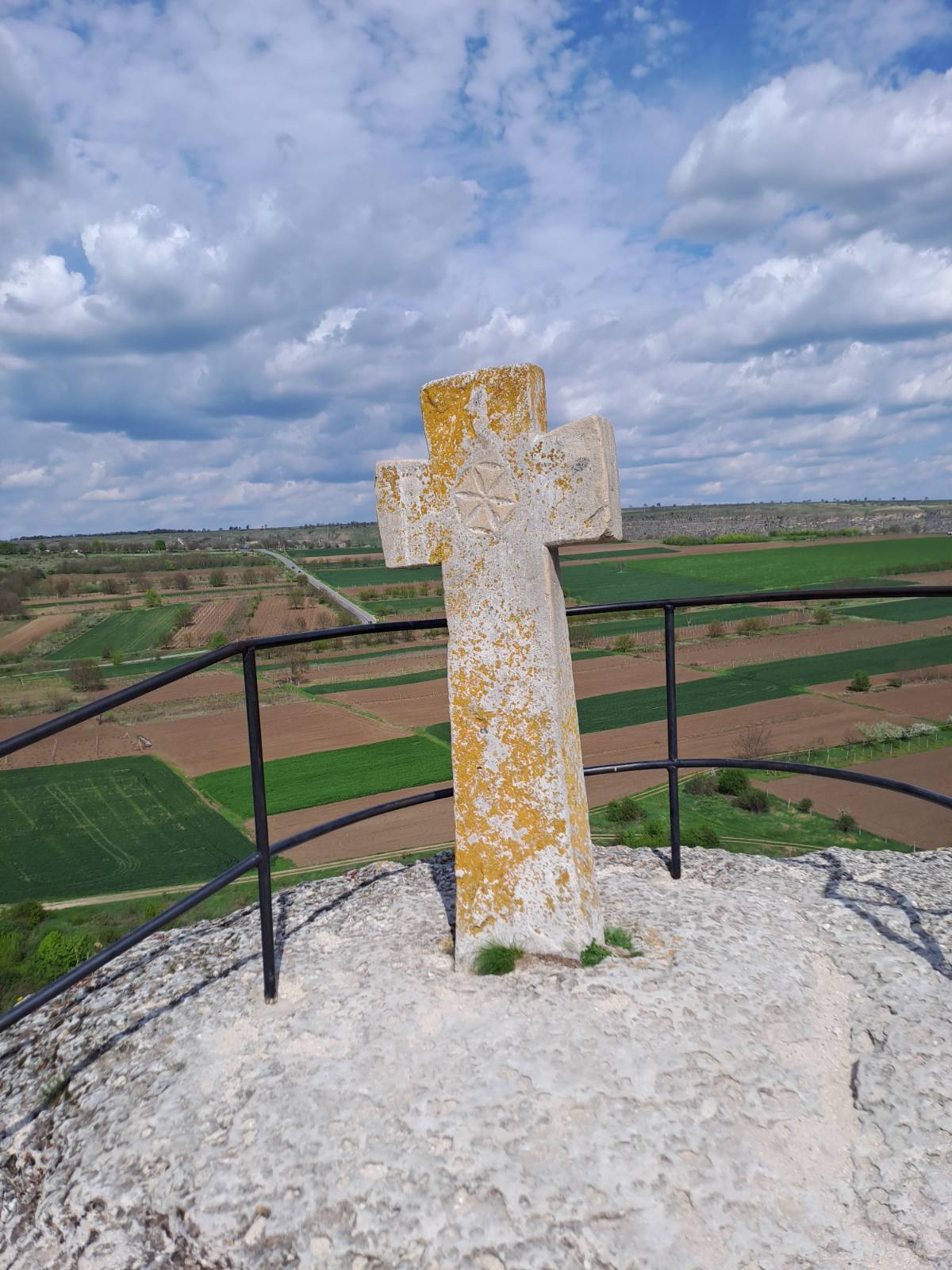
The preservation of the entire Old Orhei complex was facilitated by the fact that in the mid-17th century, by order of the ruler of Moldova, Vasile Lupu, the city was moved 18 km to the north.
Today, it is a real museum complex, undoubtedly unique, and historians still have many discoveries to make here.
Shehr al-Jedid (New City)
During the Tatar rule, Orhei was called Shehr al-Jedid (New City). During this period, two caravanserais and a mosque were built in the city center, and public baths and other structures were erected on the eastern outskirts. Some ruins of these structures remain to this day. On the banks of the Raut River, near the modern bridge, tourists are shown the foundation walls of a substantial stone structure. Archaeologists have discovered that this was an oriental-style public bathhouse, called a "feredeu" by the ancestors of the Romans.
A water supply system of clay pipes led from the river into the building. Under the stone floor, there was a heating system similar to ancient thermal baths: warm air circulated through the voids, heating the stones. The feredeu contained variously sized bathing and relaxation rooms, some lined with marble slabs.
The ancient bath "feredeu" on the banks of the Raut in Orhei.
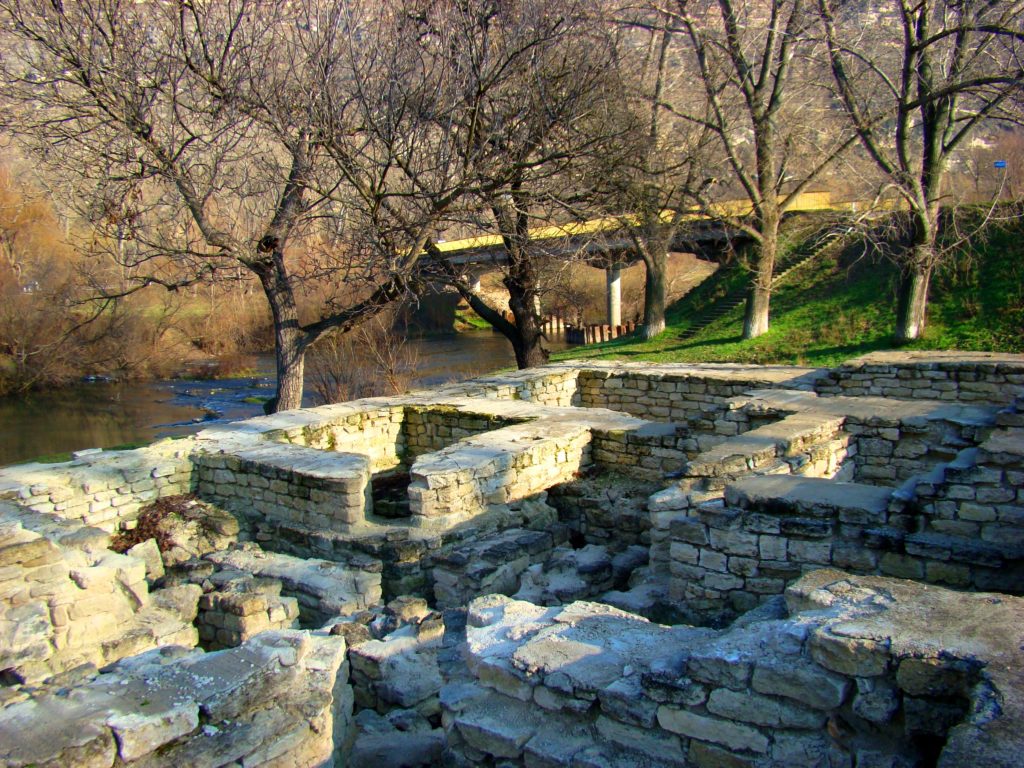
It's amazing how seamlessly the ancient foundation blends into the landscape. Today, you can explore these ruins completely freely, conjuring up a picture of a thoroughly enjoyable establishment.
If you cross the road and walk along the river's plain, you can get a good look at the rock monasteries and hermitages on the opposite bank, of which there are countless carved out in Old Orhei. In these caves, monks performed their heroic deeds before God, hiding from the constant raids of the Tatars and other invaders.
If you have the time, preparation, special equipment, and experienced instructors, you can embark on a truly adventurous quest through the cliffs and man-made caves of Orhei.
Over the centuries, the cultures of various peoples have flourished here: Dacians, Romans, Pechenegs, Cumans, Tatar-Mongols, Turks, and Slavs, all reflected in the diverse lives of the local population. It's no coincidence that scientists consider the Old Orhei Nature Reserve "a place of 1001 mysteries."
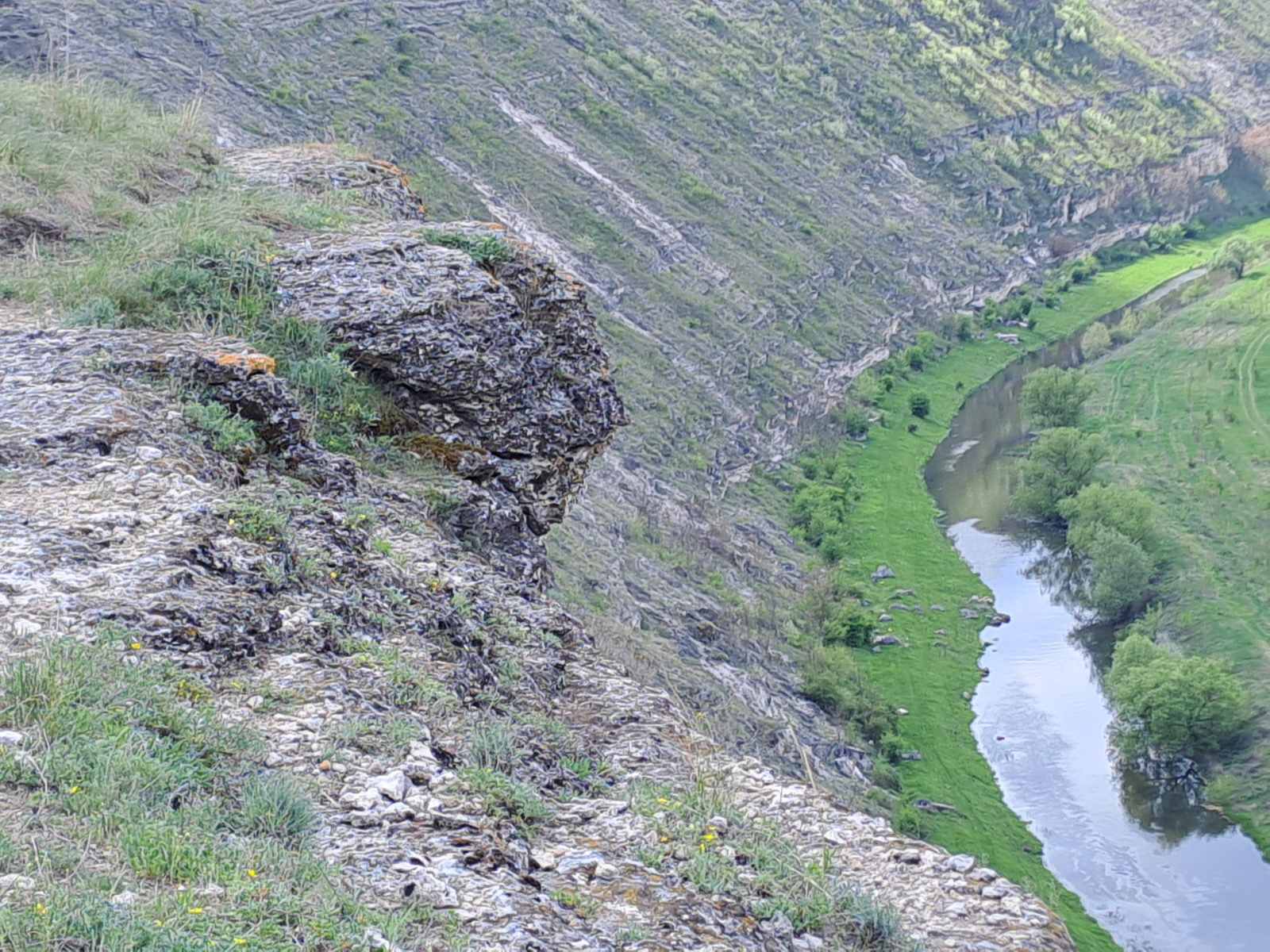
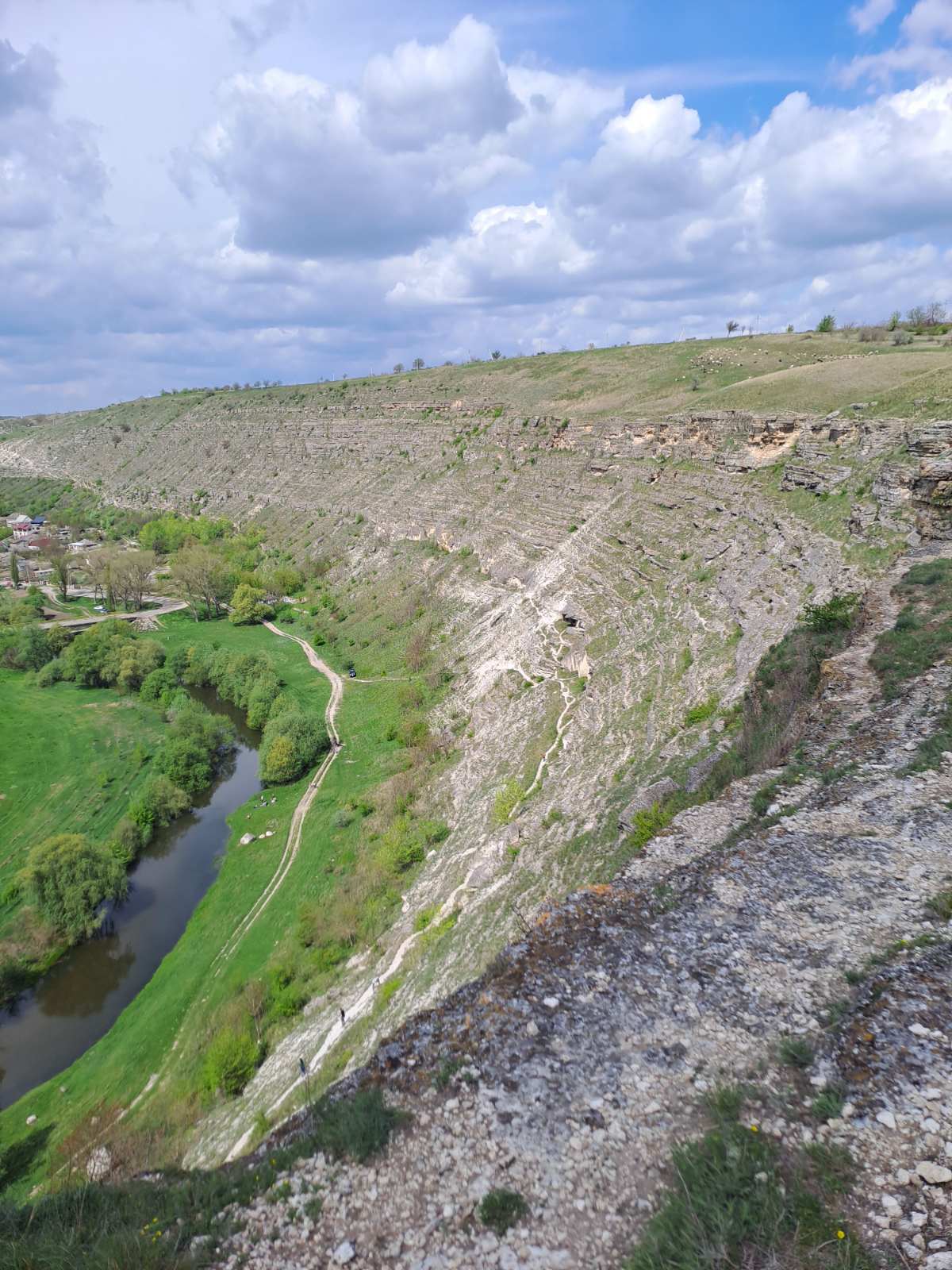
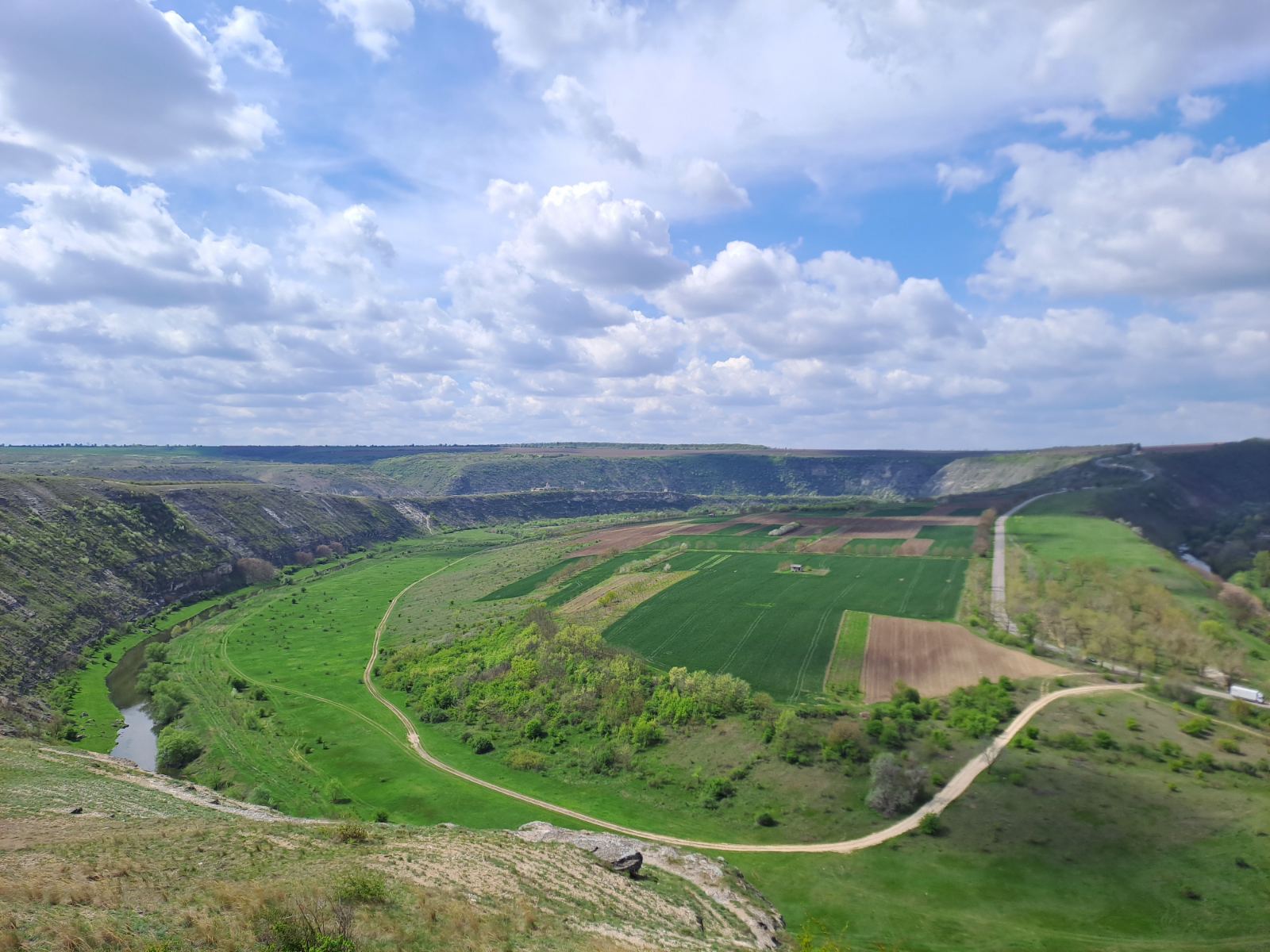
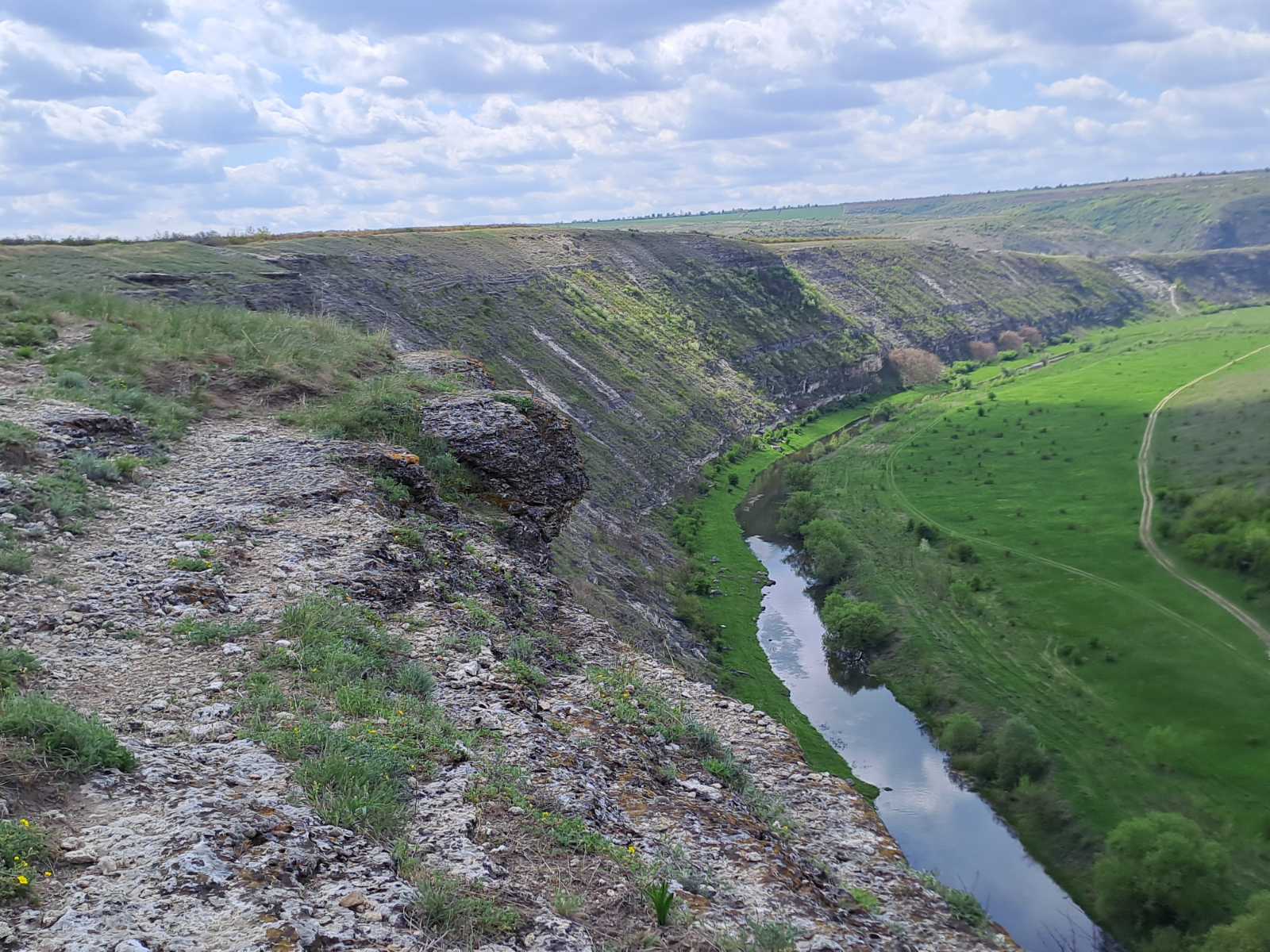
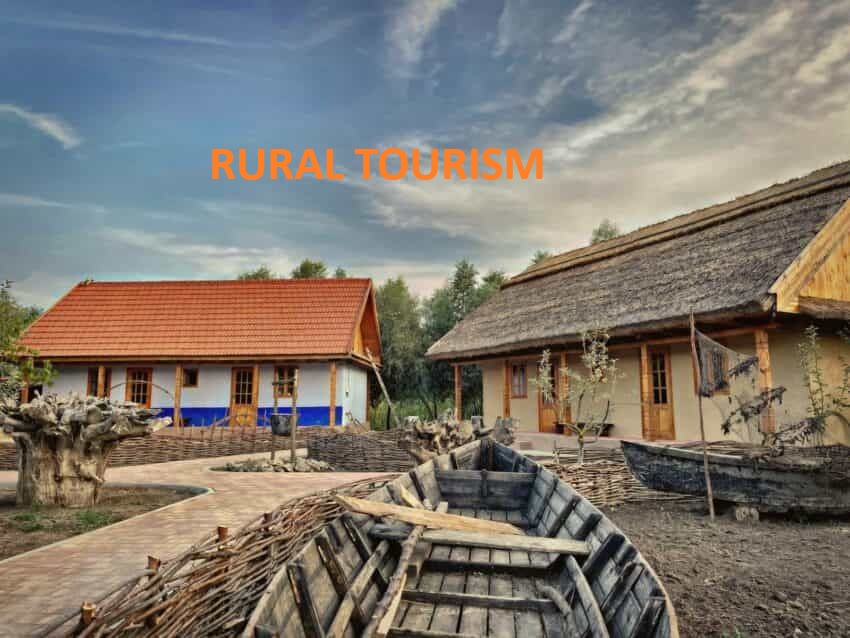
In the archaic natural setting, adjacent to exceptional archaeological sites, simple Moldovan villages have existed in Orhei for centuries – Trebujeni, Butuceni, and Mirovaya. Simple yet vibrant, they too deserve the title of living ethnographic preserves, virtually untouched by globalization.
The Reut River Valley
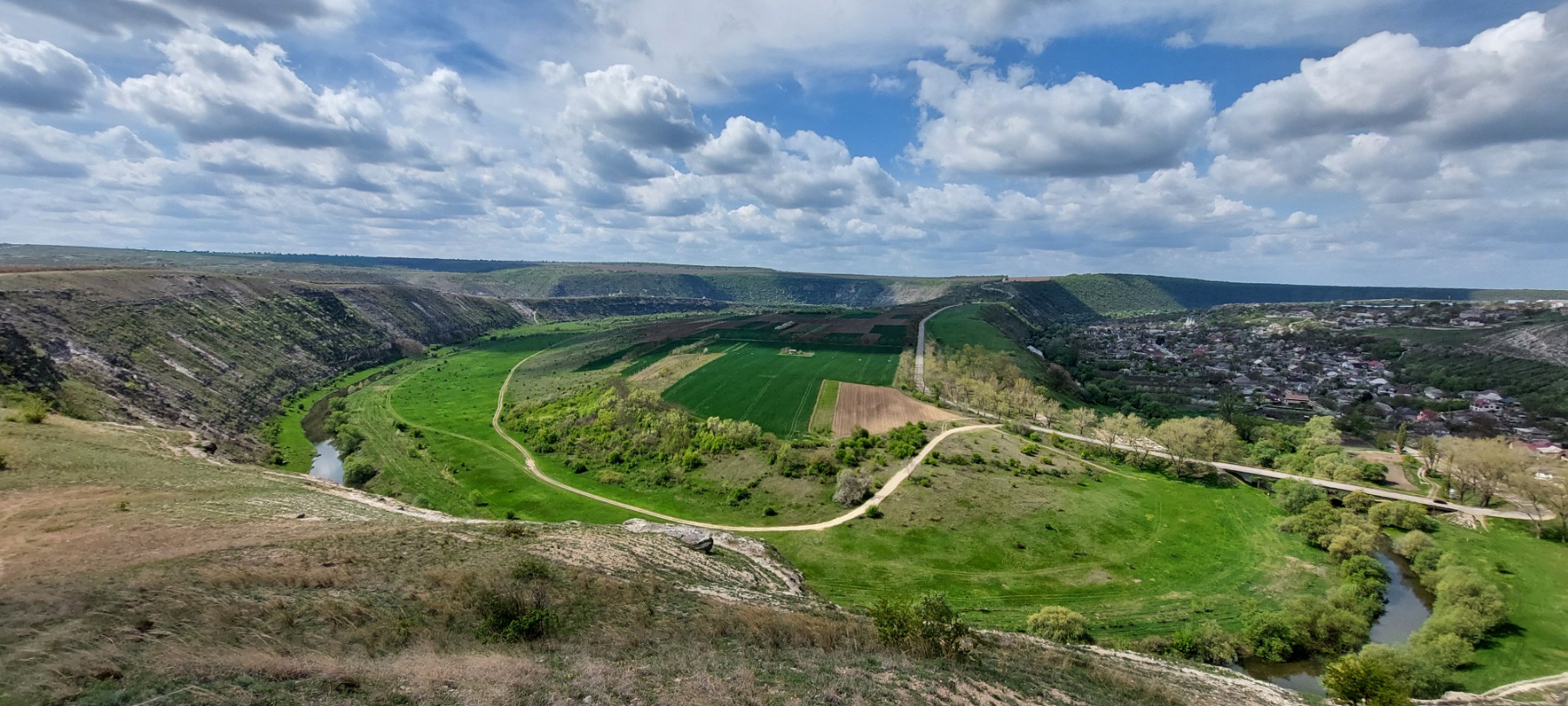
In the Raut River valley, people have long used shell rock, the so-called "kotelec," which is also easy to carve, which contributed to the creation of the ornamentation characteristic of Moldova and, in general, the image of a residential building.
These massive pillars look especially unusual when viewed from the perspective of a narrow street with its unexpected turns and cliffs, revealing to passersby the depth of the rural estate with its spacious courtyard, greenery, and outbuildings.
In Butucheni there are the oldest, “low” clay houses, as well as later, two-tiered or “high” ones, common mainly in the hilly regions of the Balkans, and the lower tier in these houses was always intended for storing fruits and wines.
The house of a Moldavian peasant was surrounded by a covered gallery with railings and pillars, forming a porch with carved railings, balusters and a valance, where one could take shelter from the sun, dry the harvest and welcome guests.
Observation deck in Old Orhei
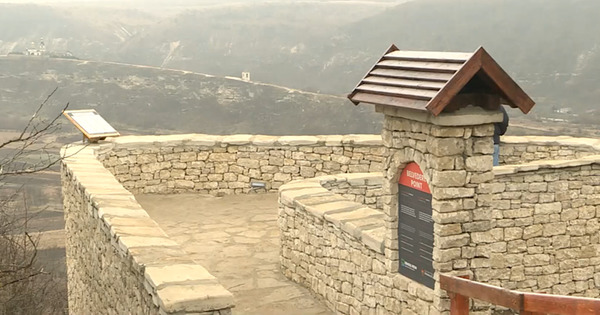
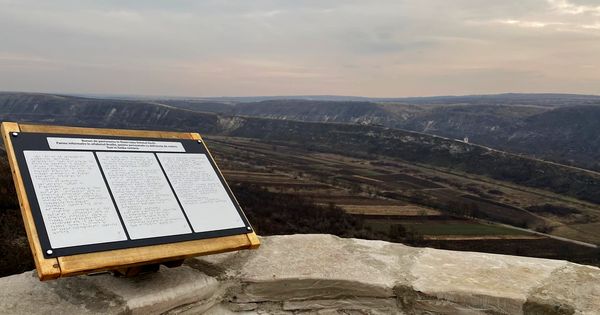
In early December 2021, an observation deck opened in Old Orhei. Situated at an altitude of 150 meters in one of the reserve's most attractive spots, it offers views of the gorge and its main landmarks."The view from here is absolutely beautiful, so interesting," visitors rejoice. "Everything is very well-maintained, the view is beautiful. It's really great, you can stop and admire it," remark those who have visited the observation deck.
Tourists have long loved this place. Now, the conditions have simply been created for them. The newly constructed observation deck can accommodate 20 people.
Book now!
If you want to book right now, simply fill out the CONTACT FORM and send it to us. We will contact you or help you contact the tourist attraction of your choice.
ANY MORE QUESTIONS?
If you have any more questions or your own opinion, you can share it by writing to us at