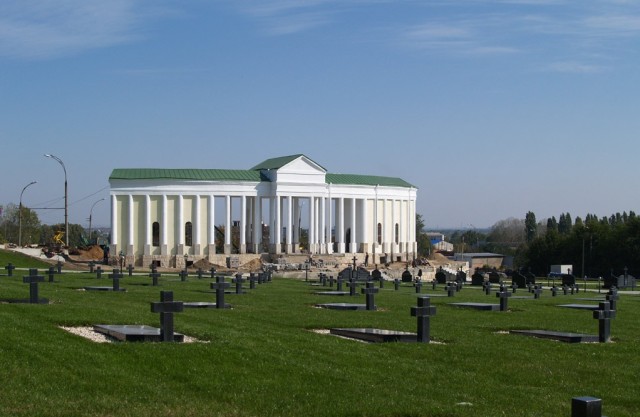
The Bendery Necropolis, a military-historical memorial to soldiers of the Russian Imperial Army, recently restored and opened to the public in 2008, is successfully operating and developing. Of course, fallen soldiers are no longer buried there, but work continues to study materials on both the individuals buried there and the history of the cemetery itself.
Furthermore, the open-air exhibition at this monument is constantly being expanded. New names are being added, and new slabs are being laid. In 2009, a new monument was unveiled at the cemetery—one dedicated to the civilian victims of Transnistria who fell during the 1992 military conflict. On October 14 of this year, the Hungarian section of the Foreign Sector was built and dedicated (consecrated). This event served as the basis for the preparation of this publication.
What is the Foreign Sector of the cemetery? The territory of the Bendery Military Necropolis memorial complex is divided into several sectors: two large military sectors, the Historical (Civilian) Sector; the 55th Podolsk Infantry Regiment sector; the sector for those killed during the storming of the Bendery Fortress in 1770; the Alley of Generals; and the Foreign Sector.
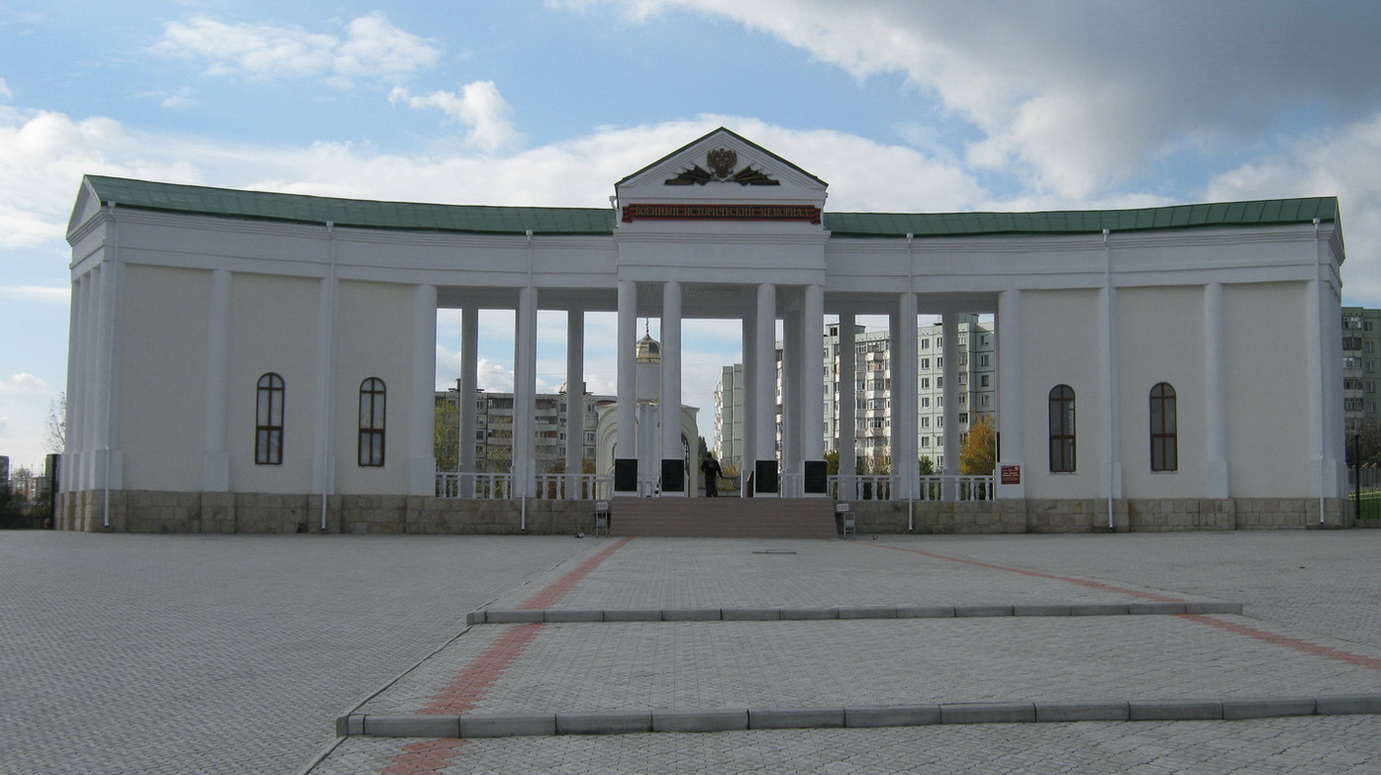
It so happened that the burials in the cemetery were initially divided into groups. Below, further into the uninhabited areas, were buried civilians, epidemic victims from among the families of military personnel (mostly children), retired military personnel, and civilian and church officials who had some connection with the military units stationed in Bender.
On the elevated section of the cemetery, where the Solnechny microdistrict now stands and where vineyards once stood, was the military and officer burial sector. It included a number of opulent crypts and generals' graves, covered with multi-ton granite and marble slabs. In the central part of the cemetery, a large plot of land remained unoccupied by the early 20th century. This became the Foreign Sector of the present Memorial Complex, due to the fact that soldiers and officers of foreign armies had previously been buried there.
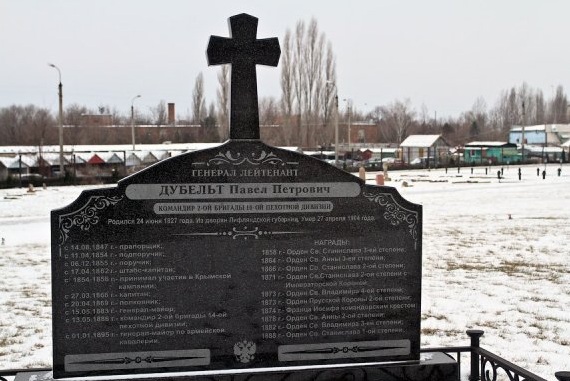
Subsequently, when the current Memorial Complex was being built, this fact presented the leadership of the Transnistrian Ministry of Internal Affairs (which was responsible for the construction) with a number of sensitive issues of various kinds, ranging from the religion of those buried there to their affiliation with the armies of different countries, sometimes even hostile to each other. The construction required a strategy that would lay the foundation for the memorial and its future development. A number of important questions had to be addressed, most importantly: what period of the cemetery was being recreated? The ancient one, founded by Mazepa's Cossacks and the soldiers of Charles XII? Russian? Romanian? The cemetery, in the 20th century, was popularly referred to as "Romanian" due to the last military burials there. How should one account for the fact that Orthodox, Catholics, and Protestants are buried here?
To the credit of the police leadership, they adopted the only correct and honest concept for the construction and development of this complex, expressed in the formula: "Death and the cemetery reconciled everyone." In other words, from the very beginning, the memorial was conceived as an international site. The cemetery was consecrated, and the first structure erected there was an Orthodox cross—for all who rest here, no matter who they were. And so, the Foreign Sector.
According to the prevailing theory, the cemetery in the Borisovka area was founded by Hetman Ivan Mazepa's Cossacks and soldiers of the Swedish King Charles XII, who arrived in Bender under the protection of their Turkish allies after their defeat at the Battle of Poltava. There were 800 Swedes, approximately 4,000 Zaporozhian Cossacks, 50 representatives of the general officers, 500 Cossacks from the Hetmanate, and other refugees. In total, Charles XII's camp numbered up to 10,000 people. The unsuccessful campaign against Bila Tserkva, which involved, in addition to Colonel Gustav Zülich's Swedes and Ukrainian Cossacks, another 40,000 Tatars and 400 Janissaries from the Bender garrison, greatly reduced the strength of the Swedish-Ukrainian army. Those who died of their wounds, brought to Bender, were buried on a plot of land known as the "Borisov Heights." The famous Kalabalyk (the battle during which Charles XII was finally driven out of Bender, in which most of the Swedes were either captured or killed) also led to an increase in the number of victims buried in the Borisov Cemetery.
Later, when Bendery became part of the Russian Empire, they began to bury Russian soldiers and officers who died from wounds in hospitals here (in all major campaigns of the 19th century, Bendery was a city in the deep rear, where there were stationary hospitals, and also, during military operations, mobile combined military hospitals were deployed.
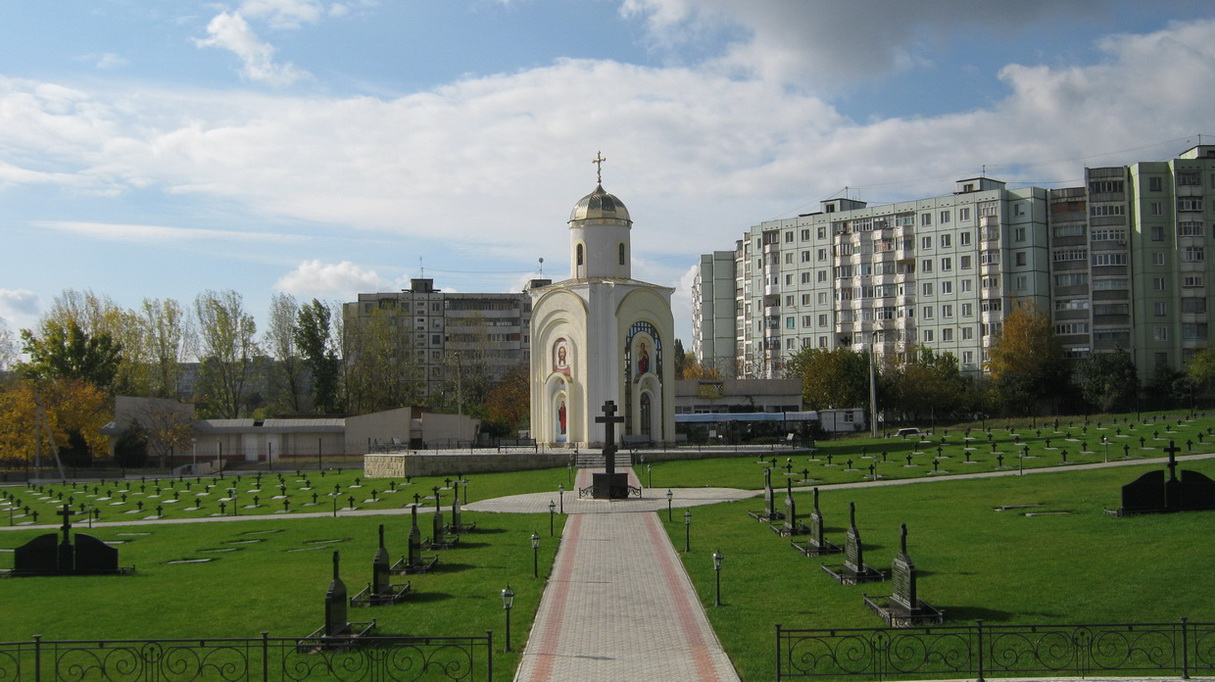
During the occupation (1918-1940), the Bender Fortress was permanently home to a Romanian Royal Army infantry regiment called "Zeche Vietor." The regiment's soldiers, whether dying or killed, were buried within the Bender necropolis. The Bender necropolis at that time was much larger, fenced, and fairly well-maintained. Burials within the necropolis were differentiated by the social status of the deceased: most were simple graves with crosses, some of which were abandoned. Only the wealthy could afford to erect a monument, and monuments were few and far between.
In 1919, during the Bendery Uprising, the French Avignon Infantry Regiment of the Entente occupation forces, witnessing the atrocities committed against the townspeople by the Romanian authorities, effectively defected to the rebels, allowing the Bendery residents to cross the bridge and escape to Soviet Russia, specifically to Tiraspol. Reinforcements, including a Romanian division and additional French regiments, were hastily brought into the city, ultimately suppressing the uprising. However, all the company commanders and other unit commanders of the Avignon Regiment were publicly executed. These 25 officers are buried in the same Romanian burial plot. A memorial plaque now stands there, bearing the inscription: "From the grateful residents of the city." This inscription isn't clear to everyone, but the residents of Bendery know what it means.
The Romanians left Bender for a short time—in 1941, they returned again, along with the Nazi German army, which, as is well known, ceded territory from Bukovina to Odessa to its Romanian allies. Many Germans lost their lives here during the battle for Bender. However, there are no German burials within the complex. If the German authorities were unable to send a body directly to Germany, they buried their fallen in special German cemeteries (for example, in the village of Farladany, a suburb of Bender)—separate from the rest.
The Romanians buried their fallen in a familiar location—the territory of what is now a necropolis. Cemetery history researchers attempted to identify these soldiers by formally contacting the Romanian Embassy in the Republic of Moldova. However, they were unexpectedly met with not only resistance but also an official parliamentary protest against the Moldovan authorities for "destroying military burial sites of the Romanian army on the territory of Transnistria." Michael Mates, a human rights representative from the US Embassy in Moldova, arrived in Transnistria to document the vandalism committed by the Transnistrian authorities. However, when he discovered the original Romanian crosses from the burial site, restored by the Transnistrian Ministry of Internal Affairs, a well-maintained grounds, and a separate memorial plaque to the Romanian soldiers, including one in Romanian, any claims against the Transnistrian side were dropped. Unofficial sources have revealed that more than 350 soldiers and officers of Royal Romania were buried in this sector between 1941 and 1944. Until now, the Romanian authorities have shown no interest in "compatriots buried outside the country's borders, or in Romanian military graves."
Nearby, under similar Celtic crosses, Soviet prisoners of war who died or were killed in Bender between 1941 and 1944 were buried. The only difference was that Romanian soldiers and officers were buried in coffins, with priests performing funeral services. The prisoners were wrapped in old blankets, and sometimes several bodies were buried under a single cross. It's no coincidence that a monument to Red Army prisoners of war, whose names, unfortunately, cannot yet be determined, was erected right next to the Romanian section of the Foreign Sector.
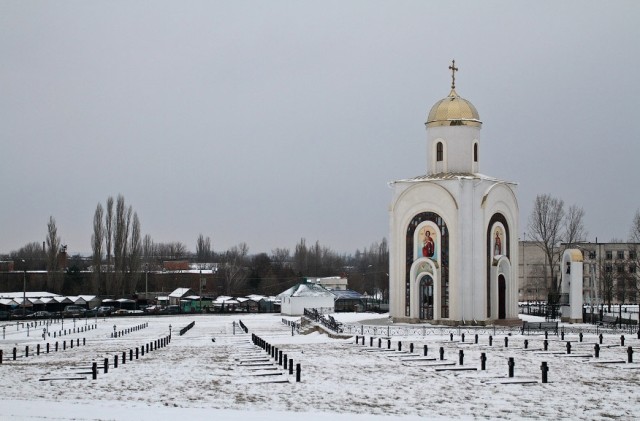
After the liberation of Bendery in 1944, several camps for foreign prisoners of war were established within the city, including Germans, Romanians, Hungarians, and soldiers from other armies and nationalities, even Japanese. The prisoners were cared for. Even during that difficult time for the Soviet Union, efforts were made to provide them with food and decent living conditions. The prisoners built five buildings around the city: the Gorky Cinema and the Victory Park opposite it; a third building, Store No. 27, near the Bendery-1 railway station; the Bendery-1 station itself; and the old railway bridge. The German prisoners were not mistreated or beaten; they were well fed, thanks to funds from the Red Cross. Despite acceptable living conditions, the prisoners died. While working in the archives, Transnistrian Ministry of Internal Affairs officers discovered NKVD lists containing the names of prisoners of war buried within the necropolis. Among them were the names of 328 Hungarian soldiers who found their final resting place here in Bender. Unlike Romania, the Hungarian Embassy in the Republic of Moldova immediately expressed interest in the information received. During the joint work, the documentary database was finally verified, and the Hungarian Embassy ordered 16 slabs of black African granite, on which craftsmen carved the names of the fallen Hungarians. On October 14 of this year, in the presence of the Hungarian Ambassador to the Republic of Moldova, embassy staff, the leadership of the Military History Institute of the Hungarian Ministry of Defense, employees of the Transnistrian Ministry of Internal Affairs, and local residents, the Hungarian section of the Foreign Sector was ceremoniously opened. An interesting fact about this event was that two clergymen from different concessions officiated at the consecration of the Hungarian section: Father Alexei, an Orthodox priest of the regimental chapel of the Savior Not Made by Hands, and Father Martin, a Catholic padre and rector of the church in Bender. Both clergymen conducted a very beautiful service and remembered all those buried in this cemetery, no matter what religion they belonged to during their lifetime.
Currently, the following memorial plaques and signs are installed in the Foreign Sector: to the Ukrainian Cossacks of Hetmans Ivan Mazepa and Pylyp Orlyk; to Swedish soldiers and officers of the army of King Charles XII; a memorial section of 16 plaques to Hungarian prisoners of war; a memorial section with 33 authentic crosses of Romanian soldiers; a memorial plaque to 25 officers of the Avignon French Regiment. A monument to Soviet Army prisoners of war and a monument to the victims of the 1992 military actions are also located here. Death and the cemetery have truly reconciled everyone.
Book now!
If you want to book right now, simply fill out the CONTACT FORM and send it to us. We will contact you or help you contact the tourist attraction of your choice.
ANY MORE QUESTIONS?
If you have any more questions or your own opinion, you can share it by writing to us at