On the high right bank of the Dniester stands one of the region's oldest cities, Bender. Every corner of the city bears traces of past events.
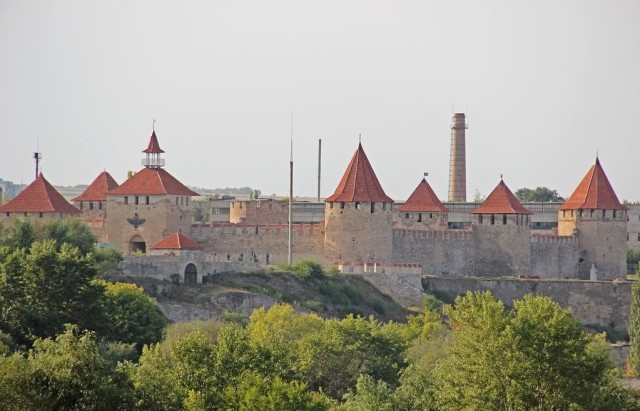
A unique monument of medieval history and architecture in the city is the Bender Fortress.
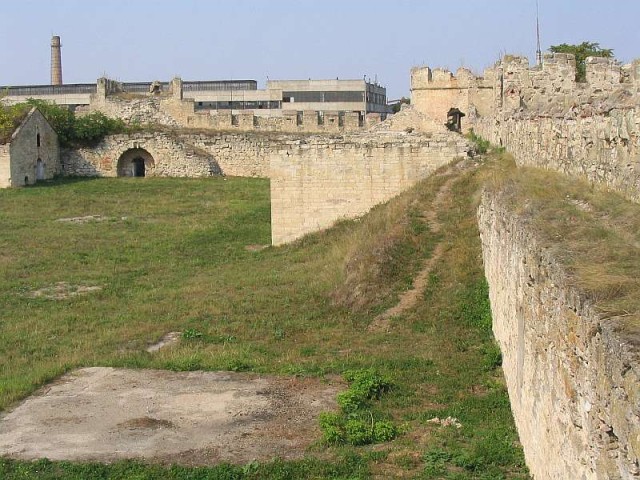
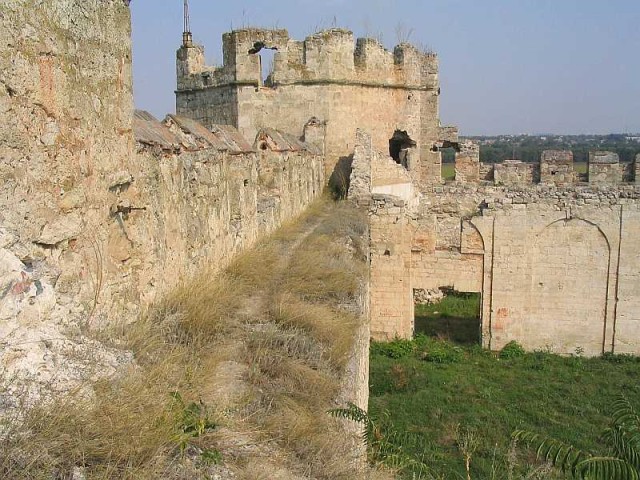
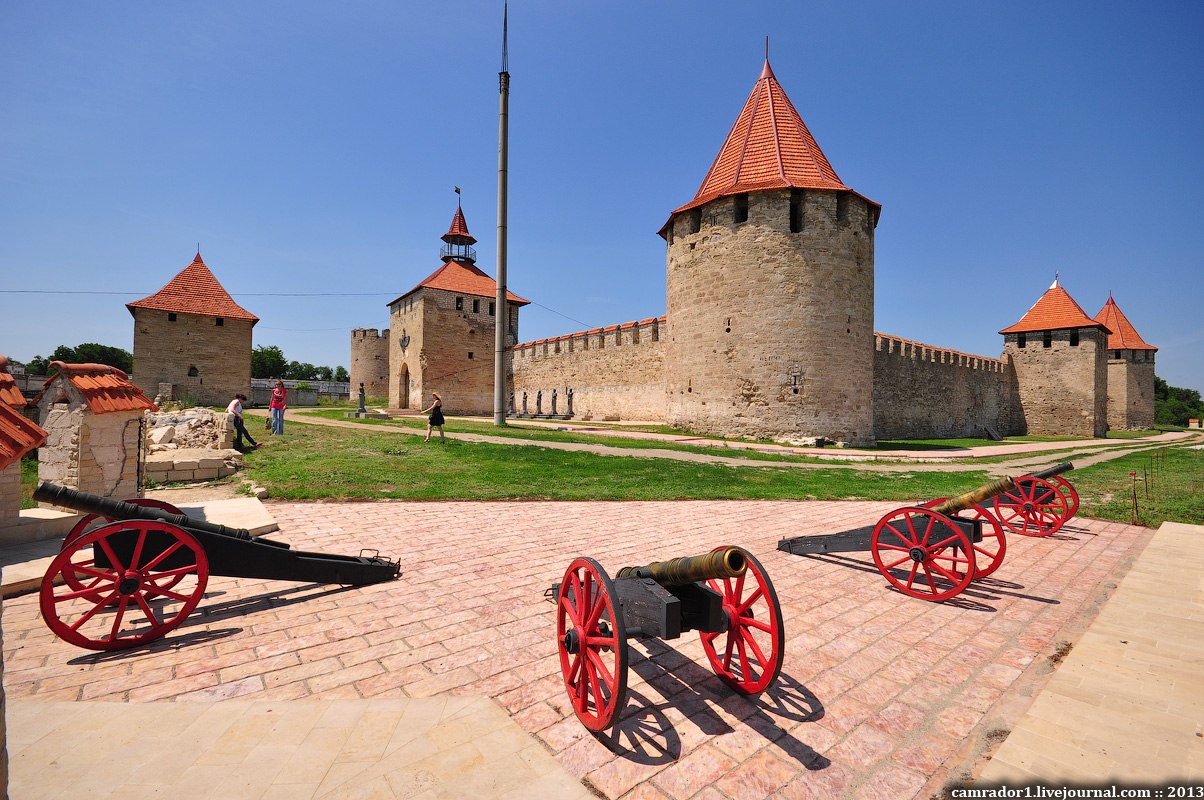
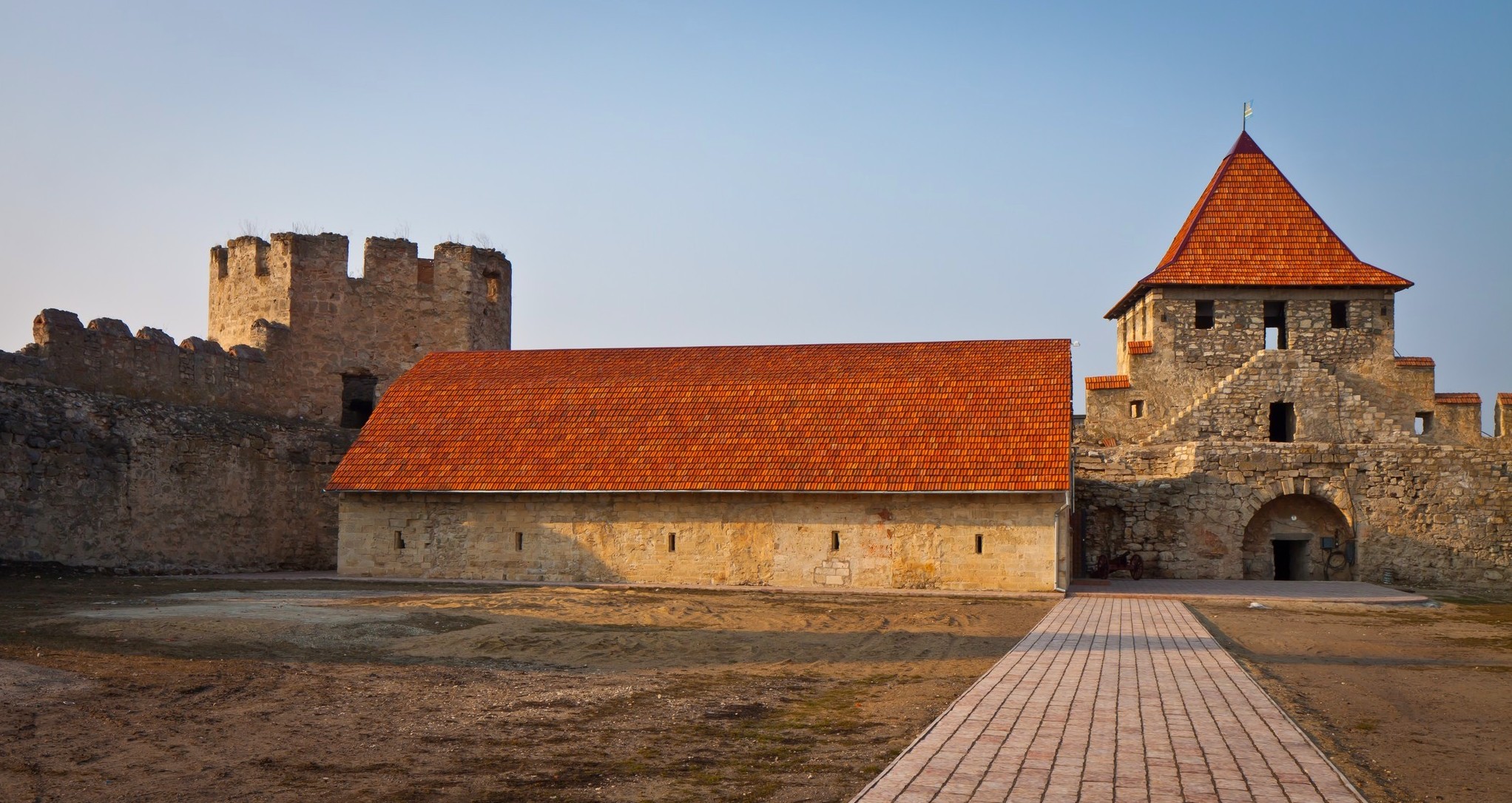
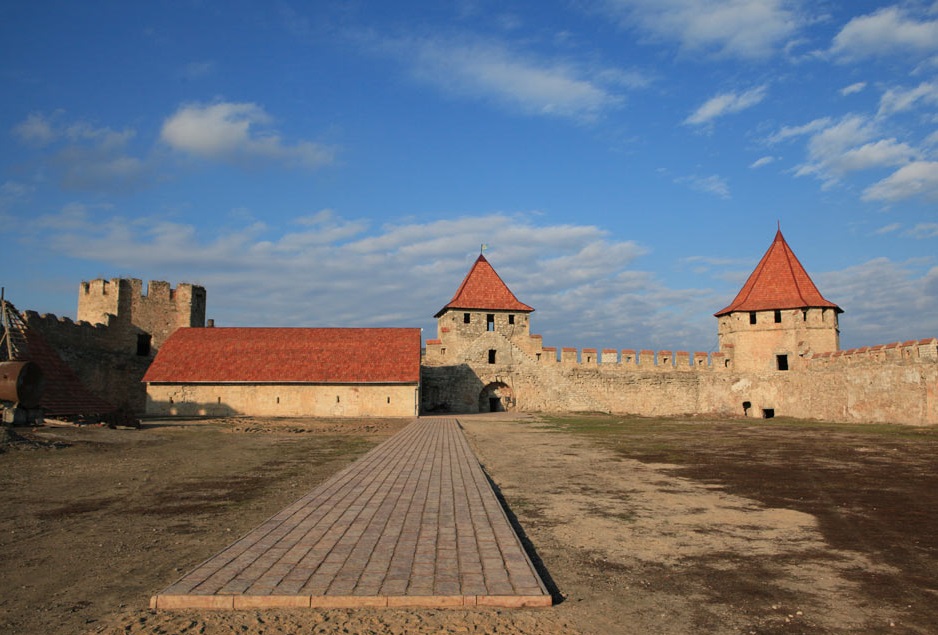
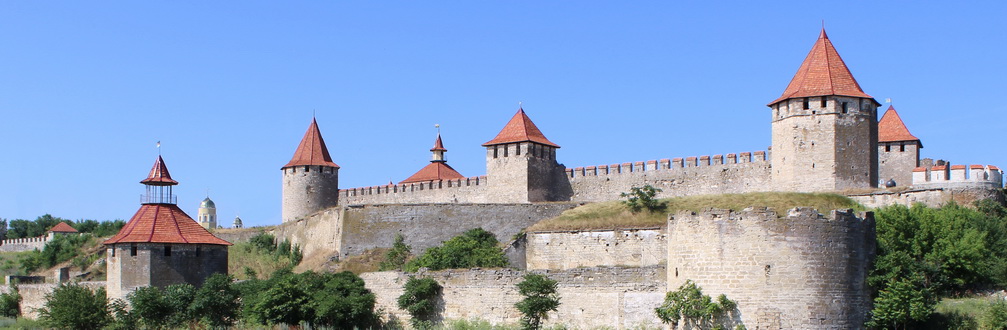
Even today, the fortress's modern appearance—an earthen rampart, a deep limestone-lined moat, the towering citadel towers and lower fortifications, and the fortress walls—confirm its former might.
In 1538, as a result of the military campaign of the Turkish Sultan Suleiman the Magnificent, the Principality of Moldavia was completely subjugated by the Ottoman Porte. However, statehood was not abolished; Moldavian princes remained on the throne, forced to pay a heavy tribute to the Turks.
In order to quickly suppress any anti-Ottoman movement, the Turkish ruler cut off part of southern Bessarabia, including Tighina and 18 surrounding villages, and incorporated it into the Ottoman Empire, where strong garrisons were soon established. A Polish-Moldavian chronicle reports this event. It states that "the Turkish king, after a brief stay in Suceava, returned to Turkey, ordering that nothing in the land be damaged, but not before taking possession of one Moldavian castle, Tighina."
Having captured Tighina, the Turks renamed it Bender, which translates as "port," "pier," or "harbor." Simultaneously, on Suleiman's orders, the Ottomans built a strong fortress here on the banks of the Dniester, using local resources and the labor of peasants from nearby villages. This fortress became the center of the newly established rayah.
The Turks built the fortress on the model of Western European bastion-type fortresses. The fortress was built, expanded, and repeatedly fortified during the 16th and 17th centuries.
From the descriptions of the Turkish traveler Evliya Çelebi, who visited the Bendery Fortress in the summer of 1657, we learn the name of the architect. He writes: "When Suleiman Khan's chief architect, Sinan ibn Abdulmeyan Aga, built this fortress, he applied all his skill. In accordance with various laws of geometry, he constructed bastions, ingenious and sturdy corner towers, and walls so elaborately designed that language is powerless to describe their qualities."
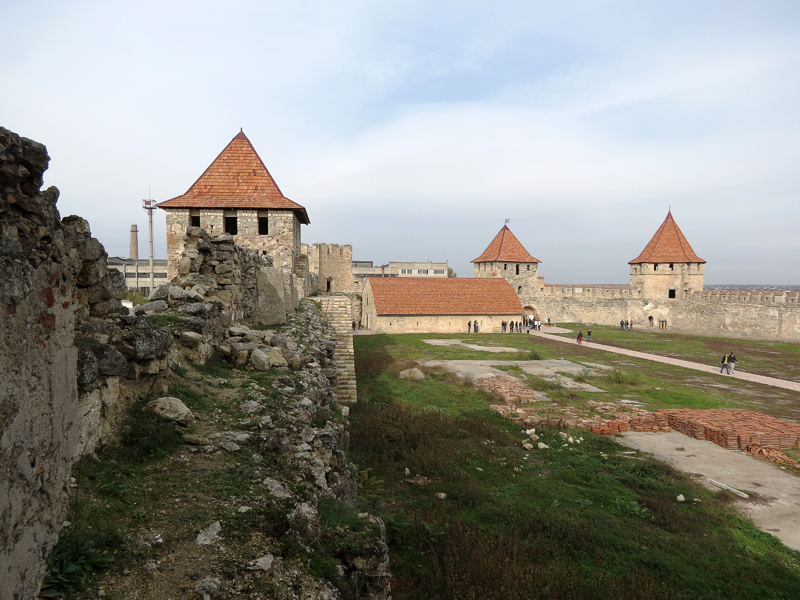
In the 17th century, the fortress consisted of a citadel, an upper section, and a lower section. The citadel, the most fortified part of the fortress, was built in the shape of an irregular polygon and consisted of eight towers: one polygonal, three round, and four square. They were connected by a high wall, reaching almost three meters in thickness. The square tower with the central entrance housed the Mosque of the Prophet Suleiman.
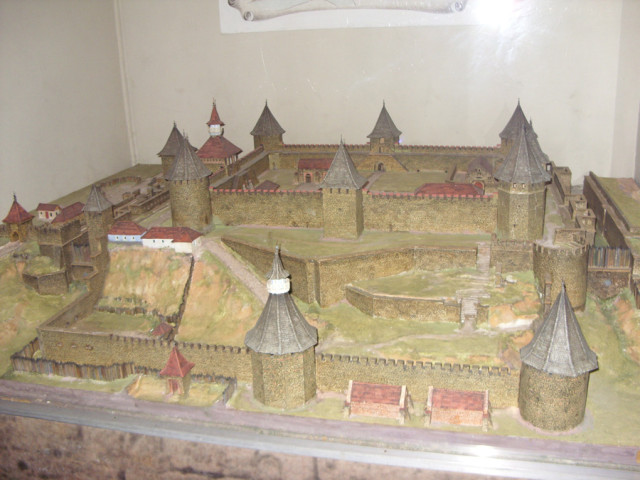
Under the towers were deep cellars. Gunpowder, ammunition, provisions, and weapons were stored there. The upper part of the fortress was the largest in area and consisted of ten bastions. The height of the fortress walls of the upper part and the depth of the moat encircling the fortress reached 2.5 fathoms (5.3 m). A high earthen rampart rose above the walls. The thickness of the fortress wall and rampart reached 6.5-7 fathoms (14-15 m). The moat and walls of the fortress were lined with kotelts, a local building stone. The width of the moat was 5-5.5 fathoms (10.6 - 11.7 m). According to the Turkish traveler Evliya Celebi, the moat never filled with water and was kept clean. On the Dniester side, it was surrounded by a high palisade. The fortress's moat and ramparts stretched over 3.5 km. In the upper part, beyond the high rampart and deep moat, were barracks, stables, residential buildings, shops, baths, entertainment venues, and a mosque.
The barracks were located primarily near the ramparts and adjacent to them. The barracks ceilings were all arched, made of stone and brick. Instead of a roof, a thick layer of soil was poured over the barracks buildings, sometimes reaching several meters in thickness.
The upper part of the fortress had three gates: Kaushan, Jassy, and Khotyn. Their names came from the cities they faced. A drawbridge was lowered across a deep moat. At night, it was raised with chains, closing the gate opening. In addition to the drawbridge, the gates were protected by a lowering metal grate and massive iron-bound doors. The upper part of the fortress was home to the spahii (cavalrymen), Turkish infantrymen, and their families.
The lower part of the fortress consisted of six towers and bastions. This section was primarily inhabited by gunners, armorers, and janissaries. On the river side stood a massive gate, nicknamed the "water gate." On the Dniester side, it was surrounded by a palisade. The fortress housed a garrison numbering between 10,000 and 15,000, not counting the families who lived there.
During sieges of the fortress, residents of the surrounding suburbs would flee behind the ramparts. By the end of the 17th century, the Bender suburb consisted of two parts, located on the southern and northwestern sides of the fortress. The suburb consisted of seven Turkish and seven Moldavian quarters. Buildings were few: two initial Turkish kolas, one bathhouse, one Orthodox church, 200 shops, and four mosques. There were up to 1,500 houses, mostly small huts roofed with reeds and straw.
The strong Turkish garrison of the Bender Fortress, working in close cooperation with the Budzhak Tatars, was able to restore order with lightning speed in Moldavia, under the Sultan's control. The Bender Fortress served as a reliable guard on the border of the Ottoman Empire. For three centuries, the Moldavian people waged a fierce struggle against the Turkish oppressors. The despotism of the conquerors and the yearly increasing harach (tribute) weighed heavily on the people. While at the beginning of the 16th century, the harach was relatively small—4,000 gold pieces—by the end of the century it had reached 65,000 gold pieces. And by the mid-17th century, Moldavia was paying the Sultan up to 75,000 gold pieces annually.
The Moldovan people repeatedly rose up to fight the Turks. The Ukrainian and Russian peoples came to their aid. The Moldovans first rose against the Turks in the winter of 1540. Alexander Korni and his army besieged the Bender fortress but were unable to take it. After repeated attacks, the siege was forced to be lifted.
The Moldavian people's liberation war reached its peak in the first half of the 1570s under Ivan the Voivode, nicknamed "the Fierce" by the Moldavian feudal lords. The war was precipitated by the ruler's refusal to accept the increased tribute demanded by the sultan. In response to Ivan's call for assistance, a detachment under Hetman Ivan Sverchevsky arrived in Moldavia. In the spring of 1574, they succeeded in besieging the Bender fortress, but it held out, and only the trading quarter was captured. In 1594, Moldavian-Cossack troops, led by the renowned Cossack Severin Nalivaiko, again besieged Bender. They managed to capture the trading quarter, plundering and burning it. However, after suffering heavy losses, they lifted the siege and advanced deeper into Moldavia. A year later, the Zaporozhian Cossacks again marched against the Turks, and for the second time, Nalivaiko, this time with Grigory Loboda, laid siege to the Bender fortress. However, they were unable to take it, and, lifting the siege, they moved on to Budzhak.
In 1684, the Polish-Lithuanian Commonwealth sent Cossack troops to Moldavia under the command of Hetman Kunitsky. The settlement was captured and completely burned. An assault on the fortress was repelled by the Turks. Only during the Russo-Turkish War was our region liberated from Ottoman rule.
Russian troops first stormed the fortress in 1770 during the Russo-Turkish War of 1768-1774. The Russian Second Army, commanded by General-in-Chief Panin, besieged the Bender Fortress for two months (July 20–September 16). A detachment of Moldavian volunteers and a Don Cossack regiment, including Yemelyan Pugachev, the future leader of the peasant uprising in the Volga region, also took part in the siege. On July 15, the fortress was besieged from both sides of the Dniester. The besieging army established five camps, three to four miles from the fortress.
Underground work continued until September 15th. Miners from both sides frequently met in the underground galleries. The besiegers' galleries were repeatedly damaged by countermine explosions. Three galleries were completed in early September, two side mines were dug on the 5th and 8th, and a forge for 700 poods of gunpowder was laid in the central gallery.
On November 4, 1789, the Turkish garrison of the fortress capitulated to the Russian troops besieging it under Prince G. A. Potemkin-Tavrichesky. The fortress capitulated thanks to the brilliant victory of Russian troops under the command of A. V. Suvorov in southern Moldova, on the banks of the Rymnik River. However, in 1791, a peace treaty was signed in Iași, according to which Russia ceded only the lands between the Bug and Dniester rivers, while the Right Bank, including the Bender fortress, was returned to Turkey.
This time, Bendery was under Turkish rule until the first days of the Russo-Turkish War of 1806-1812.
The Russian troops assigned to the war with the Turks were commanded by 70-year-old General I. I. Mikhelson. On November 23, 1806, General Meyendorff's detached column approached Bendery. His column lacked heavy artillery, so the Russian troops were unable to storm or bombard the fortress. On the morning of November 24, the Turkish pasha handed over the keys to the fortress. The fortress surrendered without a fight.
This Russo-Turkish war ended on May 16, 1812, the day the warring parties signed a peace treaty in Bucharest, according to which the territory between the Prut and Dniester rivers (Bessarabia) was transferred to the Russian Empire.
From that moment on, the Bender Fortress became a first-class Russian fortress, and the city itself was quickly transformed. In P. Svinin's 1815 description of the fortress, we learn that one of the Turkish mosques was converted into a Russian church dedicated to St. Alexander Nevsky.
The fortress's history is linked to many historical figures. In 1709, after their defeat at Poltava, the Swedish King Charles XII and Hetman Ivan Mazepa fled to Turkey. They found refuge within the walls of the Bender Fortress and camped there for about four years in the suburb of Varnitsa. For four years, the Swedish king ruled Sweden from Bender. Only in February 1713, in accordance with the terms of the Treaty of Stanilești, was Charles XII expelled from Bender to his homeland.
In history, this skirmish between the troops of the Swedish King Charles XII and the Turkish troops was named Karabalyk.
Particularly memorable is the presence of the 55th Podolsk Infantry Regiment in the fortress from the second half of the 19th century, which had a glorious combat history. The regiment's soldiers participated in the Crimean War of 1853-56, the Russo-Turkish War of 1877-1878, the Russo-Japanese War of 1904-1905, and the First World War. The history of the regiment and the fortress is connected with the presence of one of the oldest monuments in our city, now known as the "Monument to Russian Glory." It was erected in the Bender Fortress in 1912, funded by the regiment's officers and soldiers, to commemorate the 100th anniversary of the Russian victory in the Patriotic War of 1812. In 1967, the monument was moved from the fortress and installed on the Odessa-Chisinau highway. The inscription on the base reads: "Descendants to valiant ancestors."
Contacts
Legal address:
State Unitary Enterprise "Bendery Fortress" MD 3200, Pridnestrovian Moldavian Republic, address: Bendery, Panin Street 2/3
Tel.: 373 (552) 4-80-32
E-mail:
http://www.bendery-fortress.com/
Coordinator: Mobile: (779) 08-728
Book now!
If you want to book right now, simply fill out the CONTACT FORM and send it to us. We will contact you or help you contact the tourist attraction of your choice.
ANY MORE QUESTIONS?
If you have any more questions or your own opinion, you can share it by writing to us at