One of the places that is definitely worth visiting when visiting Moldova.
It is located in the center of Soroca, approximately 160 km north of Chisinau.
In the Middle Ages, Soroca was part of the entire defensive system of the Moldavian state, consisting of 4 fortresses on the Dniester, 2 on the Danube and 3 in the north of the country.
Thus, the borders of the principality were protected by a real “belt of stone fortresses.”
The Soroca Fortress was built at the crossing of the Dniester, on the site of an older fortification.
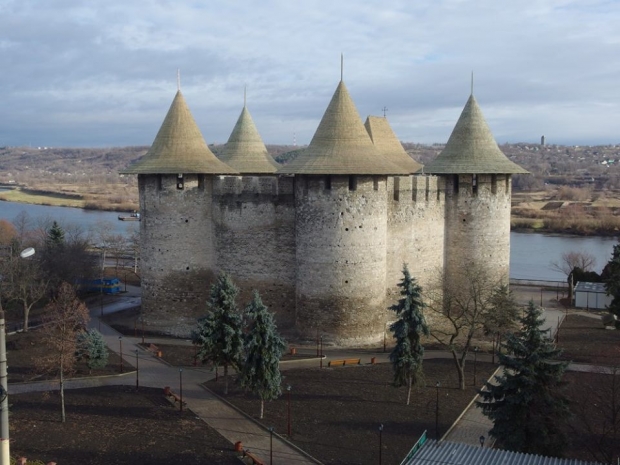
In 1499, on the orders of King Stephen the Great, a square wooden fortress was built on the site of the Genoese fort of Olkhonia (Alchona). Between 1543 and 1546, during the reign of King Petru Rareș in Moldova, the fortress was literally rebuilt from the ground up.
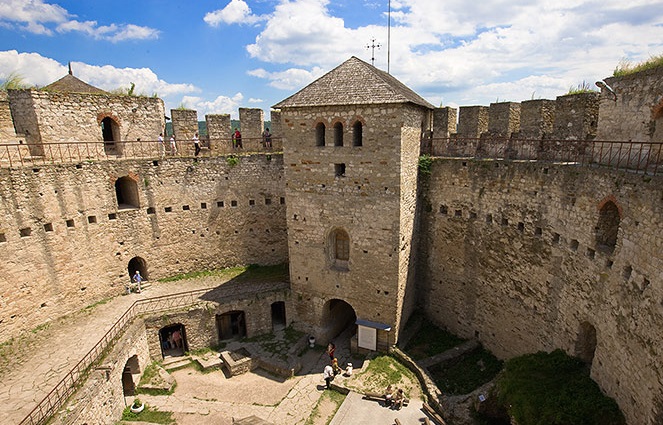
Stone was used in the construction, and it looked exactly the same as it does now, i.e. perfectly round, with a diameter of 37.5 m and 5 towers equidistant from each other.
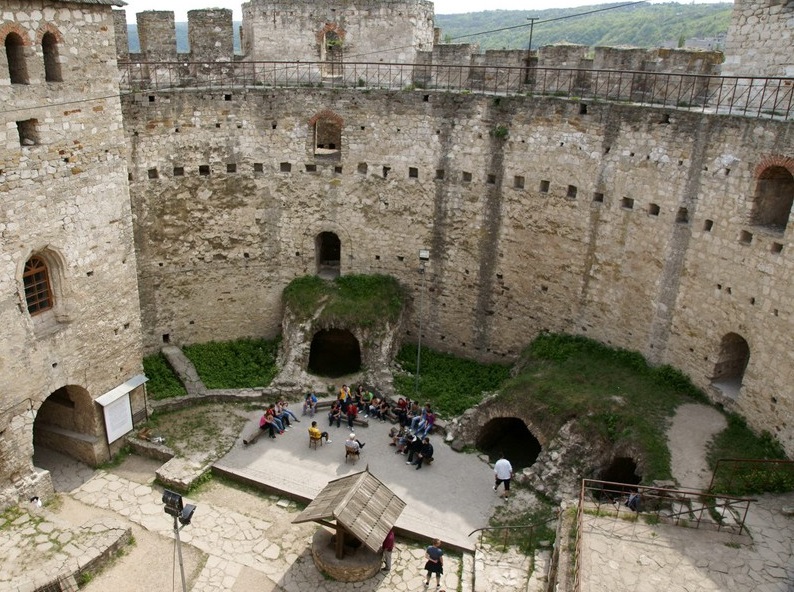
When creating this fortress, the masters based their calculations on the highest law of harmony – the "golden ratio", which is why this structure is unique among the monuments of defensive architecture in Europe.
The enormous historical value of the Soroka fortress lies in the fact that it has survived to this day in the same state as it was created by medieval masters.
Furthermore, the small military church located above the central gate has also survived. Thanks to this, it remains a unique monument of European defensive architecture.
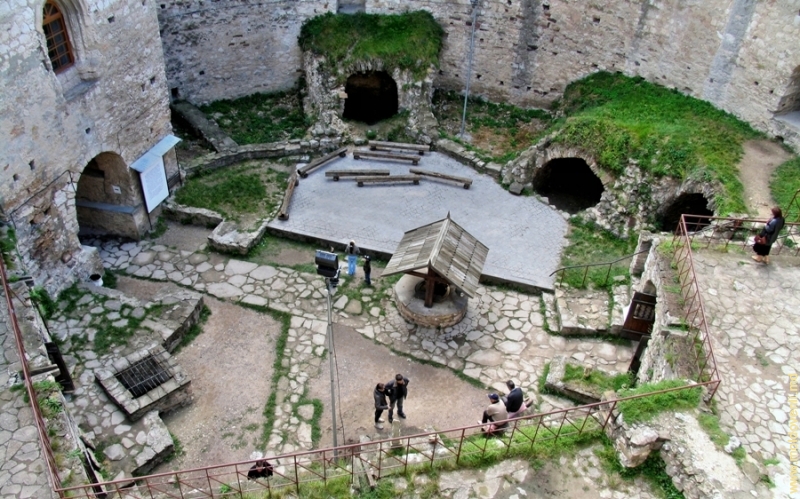
The Soroca Fortress is remarkably well-preserved, with a round shape and a diameter of 37.5 meters. It has four round towers and a fifth entrance tower, all square in shape. The towers have three tiers and special openings for cannons.
The walls are 3.5 meters thick, which protected soldiers, the chapel, and ammunition and food stores. It is the only medieval historical monument completely preserved in its original condition.
In his famous work, "Descrierea Moldovei," Dimitrie Cantemir describes "the best-defended land on the banks of the Dniester was the land of Soroca, formerly known as Olkhionia. This fortress was built of strong walls with four towers, strong and tall, built of stone."
The Soroca Fortress is also famous for being the site of the alliance between the Moldavian forces of Dimitrie Cantemir and Russian troops under Tsar Peter I during the Prut Campaign of 1711 against the Turks. At various times, Bohdan Khmelnytsky, Timush Khmelnytsky, Alexander Suvorov, and others also visited the fortress.
This medieval monument in Moldova has been preserved in its original form. Furthermore, the small military church located above the central gate has also been preserved.
Visitors to Soroca can also visit the 19th-century rock hermitage in the Bekir Gorge, the "Gypsy Hill," the county hospital (19th century), the Soroca County Museum, the "T. Stratilat" Church (eclectic style, 19th century), and the "Assumption of the Mother of God" Church (1842). Seven kilometers north of Soroca is the well-known stonemason village of Cosăuți.
In the Middle Ages, Soroca was part of the Moldavian state's entire defensive system, consisting of four fortresses on the Dniester, two on the Danube, and three in the north of the country. Thus, the principality's borders were protected by a veritable "belt of stone fortresses."
The first mention of it was seen in a document from 1499, from which it became known that the fortress was erected by order of Stefan cel Mare on the site of the Genoese fort of Olkhoniya.
The Great Ruler decided to build a fortress at the ford across the Dniester to strengthen the country's borders and protect the population from the frequent devastating raids of the Turks, Tatars, and other enemies. It was under his orders that medieval craftsmen erected a square wooden fortress surrounded by earthen ramparts.
But, alas, although it was lightly built, it also burned quickly!
Between 1543 and 1546, during the reign of Prince Petru Rareş (no less famous than his father, Stefan cel Mare), the fortress was completely rebuilt. For security reasons, he ordered a stone fortress built in its place.
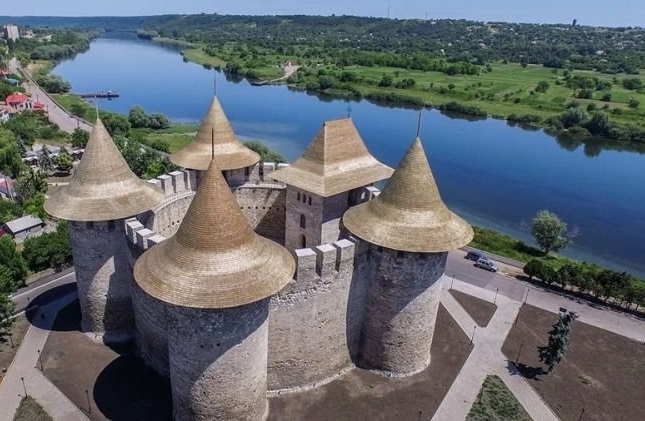
Within three years, Transylvanian craftsmen had erected a massive, circular structure. But even this proved insufficient. Five more towers were added, creating a circular defense system. The craftsmen of the time devised many other ingenious solutions. The fortress became virtually inaccessible.
Therefore, it still stands today, being a witness to many historical events.
At various times, this fortress was visited by Bohdan Khmelnytsky, Timush Khmelnytsky, Alexander Suvorov, and other famous figures. And during the Prut Campaign of 1711, the Moldavian forces of Dimitrie Cantemir and Russian troops under Tsar Peter I united here against the Turks.
Fortress architecture
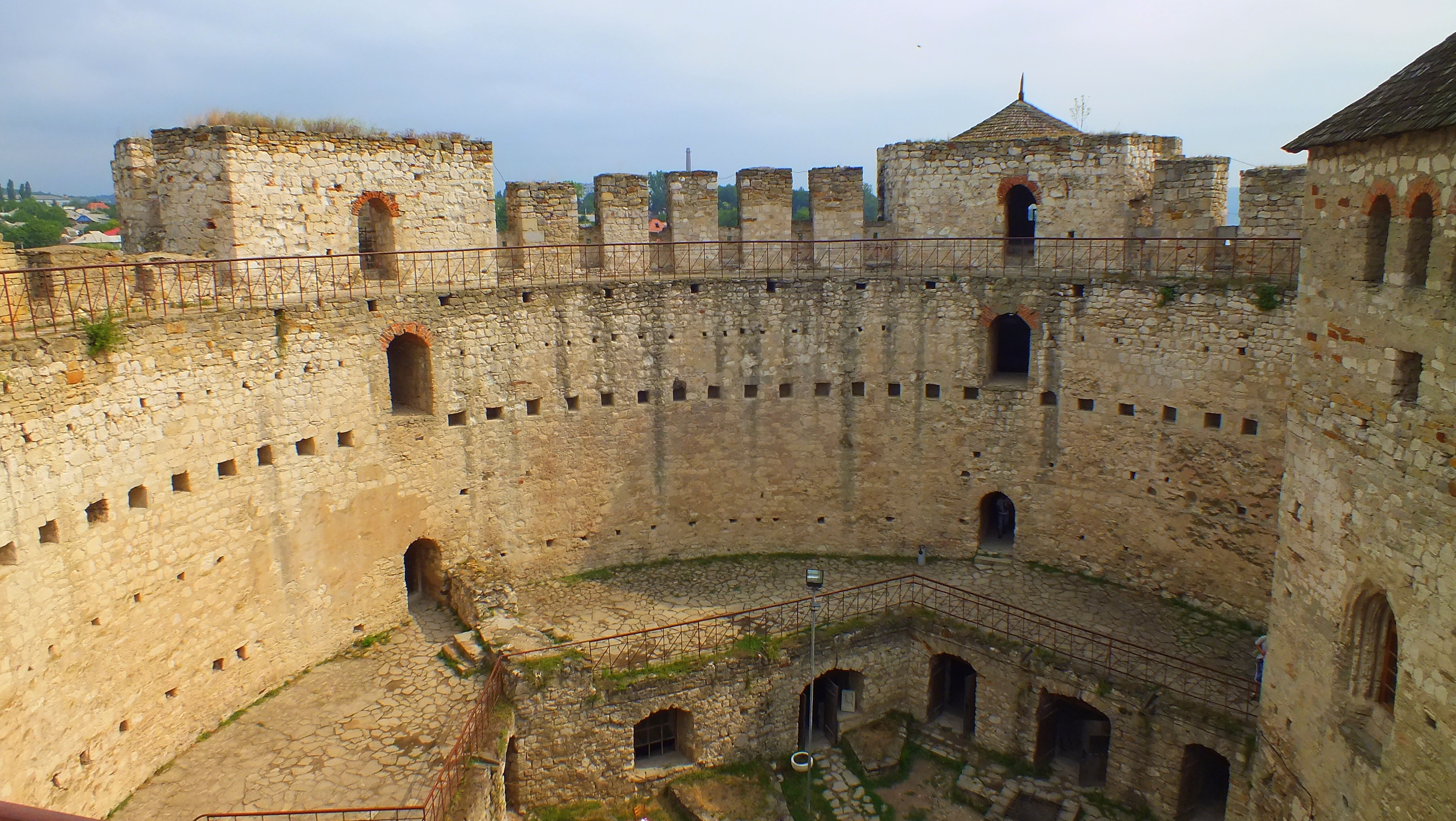
The calculations used in the construction of this fortress were based on the highest laws of harmony, rare for this area, called the “golden section” in architecture.
The Soroca Fortress is round in shape, with a diameter of 37.5 meters. It has five towers—four round ones and one square entrance tower. The towers are three-tiered and have openings for cannons. The fortress is 15-20 meters high, and the walls are 3.5 meters thick.
The best way to explore the fortress is with a guide. MOLDSU recommends Nikolai Bulat, a knowledgeable and energetic employee of the local museum. He conducts tours in Romanian, English, French, and Russian.
Knowing the ins and outs of the entire history of the Moldovan people, he weaves together legends and real events, sometimes humorously, sometimes seriously, to make you relive the emotions of the siege, recount the intrigues of the past, and tell in detail the story of Roksanda, a young and very beautiful princess who, by chance, became the cause of the main bloody events.
Listening to stories full of jokes and allegories, you will be transported to those distant times and will imperceptibly become: one of the besieged, doomed to death by starvation, or the long-awaited stork who saved the brave warriors, or a boyar who suffered capital punishment for plundering his own country, or a great ruler who administers the law of justice.
Historical value
The Soroca Fortress is a unique monument of medieval Moldovan defensive architecture. A letter from the Moldovan ruler Petru Rareș, dated April 23, 1543, addressed to the Master of Bistrița in Transylvania, in which the ruler requested that craftsmen and apprentices be sent to build fortifications in Soroca, is considered decisive in dating the stone fortress.
The stone fortress we see today was built by a group of Transylvanian masons under the direction of Master Jacob, who left an inscription inside the fortress: "This castle was built by Jacob." Before the stone fortress was erected, there was a wood and earth fortification, mentioned only in 1499, although some believe it was built earlier. Archaeological excavations at the fortress have uncovered the remains of wooden fortifications.
Book now!
If you want to book right now, simply fill out the CONTACT FORM and send it to us. We will contact you or help you contact the tourist attraction of your choice.
ANY MORE QUESTIONS?
If you have any more questions or your own opinion, you can share it by writing to us at