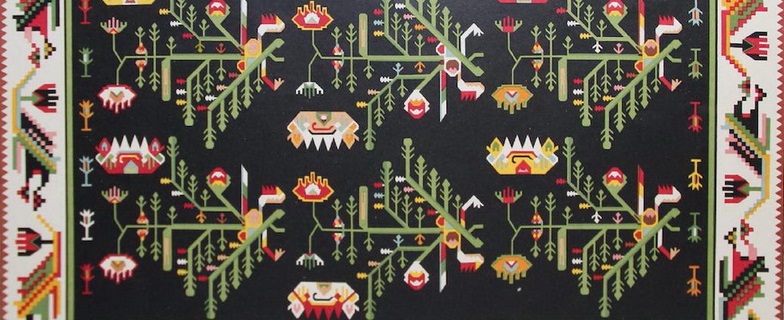
Homespun carpets played a special role in the life of Moldovans, in their holidays and rituals, in assessing the socio-economic status and skills of an individual family. They represent the result of collective creativity, an artistic vision that has been formed over many generations.
Using carpet products as an example, one can trace the level of development of fabric technology, the influence of the development of the textile industry, commercial and cultural mutual influences with neighboring peoples, and ways of adapting certain elements of Greek, Romanesque, Western European, Eastern, and Slavic cultures. The art of the Moldovan carpet was constantly improved; over the centuries, ornaments, compositions and a special color scheme were selected.
From numerous written sources and documents we learn that carpets were created from pure wool and only for the home, that they were very beautiful and carefully preserved, passed on as family heirlooms from generation to generation. Initially, carpets were not made to sell – only on rare occasions when a Moldovan family was in big trouble, the peasant was forced to sell the carpet from home.
A traditional Moldovan house must be decorated with carpets that line the walls, benches, and floor. This tradition of decorating the home with carpets has been characteristic of Moldovans from time immemorial and remains so to this day.
Carpets and their number were of great importance when it came to the skill of the girl and her family. The traditions of carpet making were closely intertwined with labor education in the family. The art of weaving and choosing carpets was highly valued among the people, so girls learned this art from the age of 10–11.
The preservation of the art of carpet making is supported to this day by the widespread tradition of preparing «komynd» – a number of objects, especially woven ones, which were distributed for the remembrance of the soul of the deceased. According to custom, it is customary to place a coffin with the body of the deceased on the carpet in front of the house in order to see him off on his last journey as «of the real owner».
Each piece was executed at a high artistic level because they all stayed in the house and were an indicator of the family's wealth and prestige.