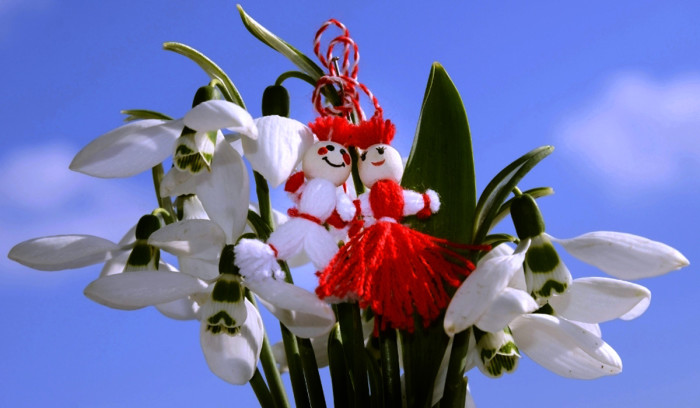
Every year on March 1st, Moldovans welcome spring with the beautiful holiday of Martisor.
The traditions of national holidays of the peoples of the world usually have their roots in the distant past and have developed over many centuries.
Some are based on historical events, others on legends passed down orally. The Moldovan national holiday, Martisor, intertwines history with several legends that arose in ancient times, when people personified the forces of nature.
According to one legend, Mărțișor symbolizes renewal—Spring's victory over fierce Winter. On the first day of her reign, the beautiful Spring emerged from the edge of the forest, saw a Giocel (snowdrop) poking through the snow in the brambles, and decided to free it from its winter bonds. But Winter, unwilling to relinquish her dominion, sent harsh frosts, intending to destroy the delicate flower. When Spring bent down to warm it with her warmth and save it, she pricked herself on the brambles' thorns. A drop of hot blood touched the snowdrop, it gained strength, came to life, and Spring came
Another legend tells of a dragon stealing the sun, which had descended to earth in the form of a beautiful maiden, bringing darkness, gloom, and cold. A brave young man freed the sun, which illuminated the world and warmed the earth, bringing joy to humanity. But in a battle with the dragon, the young man was wounded. Where drops of his blood fell on the snow, white flowers sprouted—snowdrops, harbingers of spring. In gratitude for his rescue, the red and white Martisor became a talisman in his memory.
History interprets the origins of the holiday differently, but confirms its ancient origins, dating back to the Roman Empire. Archaeologists have discovered red and white stones worn around the neck as far back
Modern martisors are two red and white threads woven together, with flowers at the ends. Crafted in various shapes and sizes by skilled craftswomen across the country for March 1st, they symbolize the arrival of spring. People give martisors to each other as a token of gratitude, wishing for wishes to come true, and wear them pinned to their clothing on the right chest throughout March. At the end of the month, traditionally, a martisor is hung on a blossoming tree, accompanied by a wish that is believed to be sure to come true.
The national holiday of Mărțișor has given rise to another good tradition: a music festival of the same name held in the country in the first days of March. It has now acquired international status. Moldova attracts a large number of guests from many countries. From March 1st to 10th, concerts featuring artists from various genres and musical styles are held in all of Chișinău's halls and theaters as part of the festival.
The people of Moldova hospitably welcome all who wish to experience national Moldovan traditions and participate in the "Martisor" festival, thereby contributing to the development of friendship between the peoples of the world.
Author: Lyubov F. Barsukova (website http://moldsu.com )