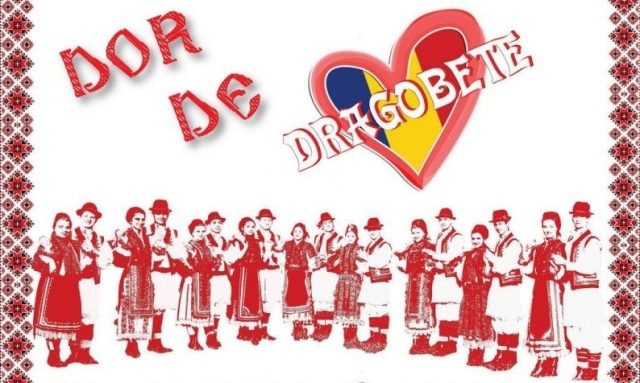
Dragobete is traditionally celebrated in Romania and Moldova on February 24. The traditional Dragobete holiday in these countries is the international equivalent of Valentine's Day.
What is so interesting about the Dragobete holiday?
According to the history of the holiday's origins, in ancient times this day celebrated the arrival of spring, the awakening of nature, and the betrothal of birds. Humans, as part of nature, could not remain indifferent to the awakening of all living things and rejoice in the arrival of spring.
In mythology, the character of Dragobete is somewhat similar to the Greek Eros or the Italian Cupid, rather than to the Catholic Saint Valentine.
This image originated with the ancient Dacians, for whom it personified the patron of animals. Later, in Romania, it was transformed into the patron of love. Traditionally, February 24th is celebrated with a large feast in Romanian and Moldovan villages, although this tradition has recently begun to fade.
It was believed that those who participated in this festival would enjoy excellent health throughout the year and would be spared from such serious illnesses as fevers. Legend has it that Dragobete would bring abundance and prosperity to the homeowners throughout the year.
On this day, they said, "Dragobete kisses the girls." According to tradition, young men and women would arrange to meet in front of the church and go together into the forest to pick the first spring flowers. In southern Romania, in Mehedinți County, there's an interesting custom: a young woman would return from the forest running. She would be pursued by the young man who had fallen in love with her.
If a young man caught up with his beloved, and she was also in love with him, the girl had to kiss him in front of everyone. This demonstrated her feelings for the young man. After this, they were considered engaged. This was also a unique way to find out what weddings would take place the following fall.
As for the older generation, they also found something to do on this day; they sacrificed animals, as it was believed that this increased the number of weddings in the fall.
According to another belief, in order to be loved for a whole year, a woman had to touch a man from another village.
And of course, magic was essential, so in the evening, girls would gather the last remnants of snow, which they called "fairy snow." The water from this snow was used throughout the year as a beauty aid and for love spells.
Customs. Traditions. Superstitions.
There's a popular belief that at the end of February, at the beginning of spring, birds that stay for the winter mate, or "betroth." It's said that those birds that don't mate during this period will not have any chicks for the rest of the year.
This holiday, popularly known as "Birds' Engagement," has been adopted by those who celebrate this day. There was a belief: "If a girl or boy doesn't meet someone of the opposite sex on this day, they won't be loved for the rest of the year."
And if a girl went out with her boyfriend, they had to kiss, otherwise they would not love each other for the whole year, because it is not for nothing that they say that “Dragobete kisses girls.”
This holiday was generally considered appropriate for minor household chores; women cleaned but avoided weaving and washing. Dragobete was considered unsuitable for serious work, so both women and men avoided work, fearing incurring Dragobete's wrath and "being forced to chirp like birds all their lives."
People say that on this day, newlyweds should drink tea made from cherry branches and eat flatbreads with crushed hemp seeds (“zhulfa” or “tresnitsa”) in order to love and be loved all year long.
It's a shame that many of the traditions associated with Dragobete have not been preserved or have been forgotten over time. However, each year the holiday returns to its rightful place, as Dragobete is a holiday that symbolizes love.