The national identity of every people is deeply rooted in its history, traditions, cultural heritage, and the desire to live according to the values and principles passed down from generation to generation. Throughout history, nations have sought to preserve their language, traditions, cultural identity, and right to determine their own future. For the people of Moldova, this aspiration has been shaped by centuries of historical events, political changes, and the struggle to preserve their national identity.
The history of Moldavia as a distinct political entity dates back to the middle of the 14th century. In 1359, under the leadership of Bogdan I, the Principality of Moldavia was established. Over the following centuries, the territory experienced numerous political and territorial changes and found itself at the crossroads of major European powers. Its strategic location between Central and Eastern Europe made Moldova an important region throughout European history.
During the 16th century, the Principality of Moldavia became a vassal state of the Ottoman Empire, while retaining a significant degree of internal autonomy. In subsequent centuries, the territory of historic Moldavia was affected by the competing interests of the Ottoman, Austrian, and Russian Empires. These political transformations profoundly influenced the development of the region, its population, culture, and traditions.
The history of the Moldovan lands continued to evolve during the 19th and 20th centuries. Following the complex political changes in the region, Bessarabia became part of the Russian Empire in 1812. After the First World War, Bessarabia united with Romania in 1918. In 1940, the territory was incorporated into the Soviet Union, and the Moldavian Soviet Socialist Republic was subsequently established. These dramatic events left a lasting mark on the history and collective memory of the Moldovan people.
At the end of the 20th century, a new chapter began. As the Soviet Union entered a period of profound political and social transformation, the people of Moldova increasingly expressed their desire to affirm their national identity and determine their own political future. The movement for sovereignty and independence gained considerable strength, ultimately leading to one of the most important events in the country's modern history.
On August 27, 1991, the Parliament of the Republic of Moldova adopted the Declaration of Independence. This historic document proclaimed Moldova a sovereign and independent state and expressed the country's determination to freely determine its present and future without external interference. The Declaration became a fundamental document of modern Moldovan statehood and marked the beginning of a new era in the country's history.
Thus, in 1991, the independent Republic of Moldova emerged as a sovereign state on the European map. Moldova subsequently became a member of the United Nations and established diplomatic relations with countries around the world. Independence Day, celebrated annually on August 27, has become one of the most important national holidays in the country. It is a day dedicated not only to the independence of the state, but also to the history, culture, traditions, and aspirations of the Moldovan people.
How Independence Day Is Celebrated
The celebrations traditionally take place throughout the country, with the largest and most significant events organized in the capital, Chisinau. The heart of the celebrations is the Great National Assembly Square, located in the center of the city. On this important day, the square becomes a gathering place for citizens, government officials, representatives of political and public organizations, diplomats, foreign guests, and visitors from different parts of Moldova.
One of the traditional elements of the official ceremony is the laying of flowers at the monument dedicated to Stephen the Great (Stefan cel Mare). He is one of the most important historical figures in Moldovan history and is widely remembered as one of the country's greatest rulers. Stephen the Great ruled the Principality of Moldavia in the 15th century and became renowned for his military leadership, political wisdom, diplomatic skills, and efforts to protect the independence of the principality.
The monument to Stephen the Great is one of the most recognizable landmarks of Chisinau and holds a special symbolic meaning for the people of Moldova. On Independence Day, laying flowers at the monument is a tribute to the country's historical heritage and to the generations who contributed to the preservation of Moldovan identity and statehood.
Another important part of the commemorative program is the tribute paid to those who fought and sacrificed their lives during the country's difficult historical periods. Flowers are laid at memorials dedicated to soldiers and victims of war, symbolizing respect for those who defended their homeland and contributed to the preservation of peace.
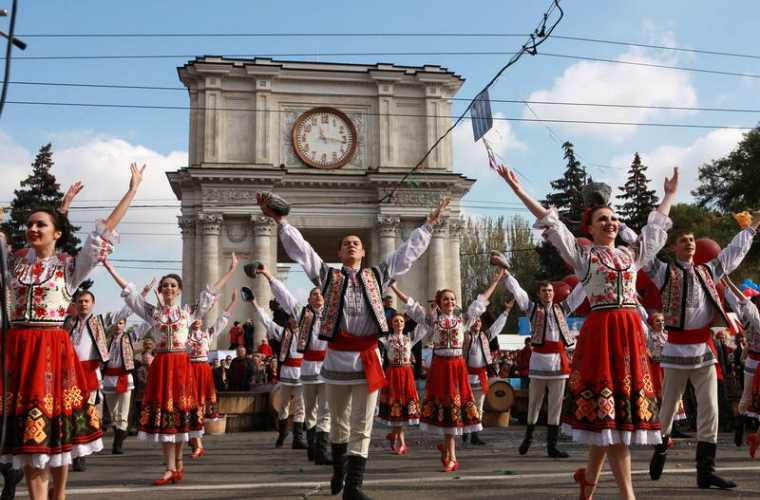
The official ceremonies are followed by concerts, cultural events, public performances, exhibitions, and entertainment programs. Chisinau's streets and public squares become particularly lively, welcoming both local residents and visitors. Traditional Moldovan music and dance are an important part of the celebrations, allowing people to experience the country's rich cultural heritage.
Throughout the day, visitors can enjoy performances by well-known Moldovan musicians, singers, and artistic groups. Traditional folk costumes, national music, dances, handicrafts, and local cuisine create a festive atmosphere and provide an opportunity to discover the cultural character of Moldova.
Independence Day is also an occasion for various sporting competitions, family activities, exhibitions, and entertainment programs. Events are organized not only in the capital but also in towns and villages across the country, allowing people throughout Moldova to participate in the national celebration.
For visitors to Moldova, Independence Day offers a unique opportunity to experience Chisinau at its most festive and vibrant. The celebration brings together history, culture, music, national traditions, and modern Moldovan life in one memorable event.
As evening approaches, the festive atmosphere reaches its peak. The streets and central squares of Chisinau fill with people enjoying concerts and entertainment, while the city is illuminated by lights and decorations. The celebrations traditionally culminate in a spectacular fireworks display, lighting up the night sky above the capital.
For the people of Moldova, Independence Day is more than simply a public holiday. It is a day of remembrance, national pride, unity, and hope for the future. It provides an opportunity to honor the country's history, remember those who contributed to its development, celebrate its cultural heritage, and look toward a peaceful and prosperous future.
Every year on August 27, Moldova celebrates its independence with a sense of pride and optimism. The holiday brings together people of different generations and backgrounds and reminds everyone of the importance of preserving peace, cultural heritage, national traditions, and the right of a country to determine its own future.
The lights of the fireworks over Chisinau mark the end of the celebrations, but they also symbolize hope for a brighter future for the Republic of Moldova and its people.