Approximately 25 km from the district center of Drochia, near a country road between the villages of Myndyk and Kotova, in the middle of an open field, lies one of the most amazing manor and park ensembles in Moldova, the dendrological park Villa Myndyk.
This estate was purchased from a Moldovan landowner by the noble-Armenian Ohanowicz family in the 19th century. In 1896, a park was established here, and the estate building, styled after a Chinese pagoda, was rebuilt. Three ponds were also cleaned and landscaped, a stone family necropolis was built, and a water mill with a kilometer-long underground water pipeline was constructed. Most importantly, the park's plan was carefully thought out, including the creation of alleys, stone paths, and the creation of an intricate metal bridge, the Bridge of Sorrow, across the stream. The park's planning and overall concept were the work of the great architect, Alexandru Bernardazzi, who constantly consulted the vision of the estate's owner, Caetano Ohanowicz.
An alley leading to a bridge over a stream dividing the Villa Myndyk Park into two parts
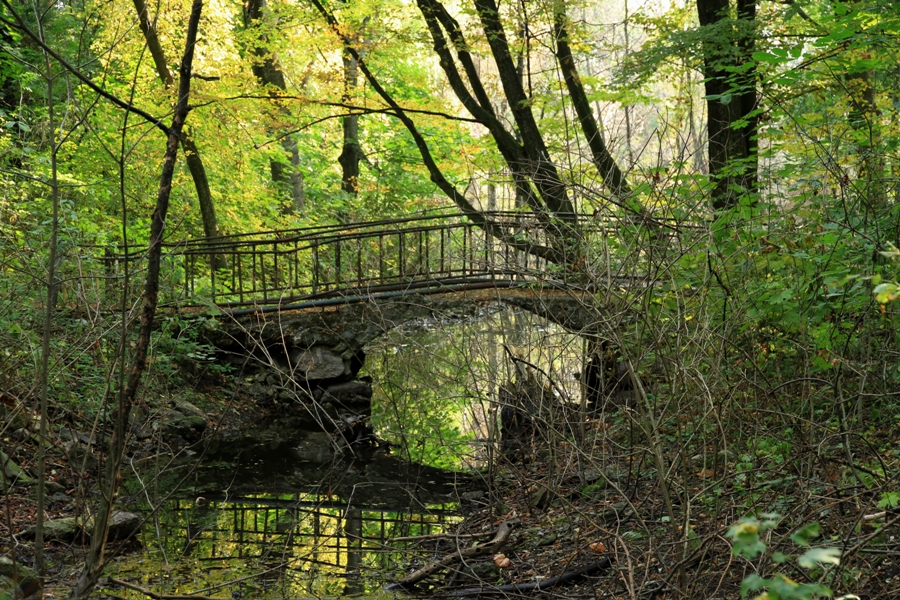
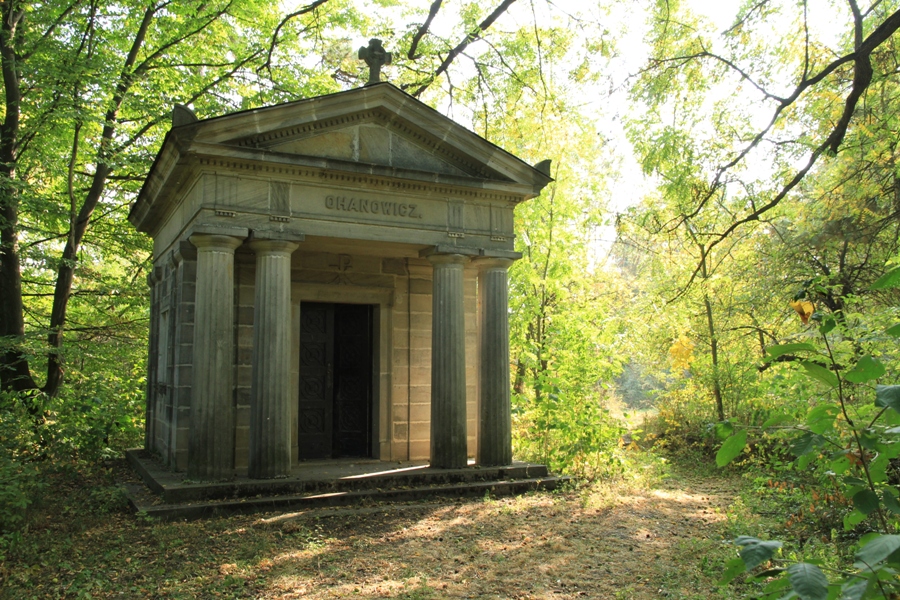
The concept was far from simple. Initially, the park was divided into two equal parts, separated by a stream with a bridge across it. The stream itself symbolized the slender thread of life, separating the upper, earthly part of the park from the lower, symbolizing eternity. It is in this part of the park that the only building—the necropolis—is located. All other buildings—the estate itself, the pump house, and other outbuildings—are located in the first, "earthly" part of the park. A long alley, densely planted with hornbeam, runs through the entire park, symbolizing the path of life. In the middle, it is crossed by a stream, spanned by an ornate bridge. Along the stream, on its left (earthly) bank, there once gushed six springs, feeding the stream that flows into the estate's central pond.
Great attention was paid to the types of trees planted. For example, near the necropolis stands a huge, solitary black pine, and an alley lined with black walnut trees, a symbol of eternity, begins. This alley extends southward to the edge of the park, beyond which lie vast expanses of fields.
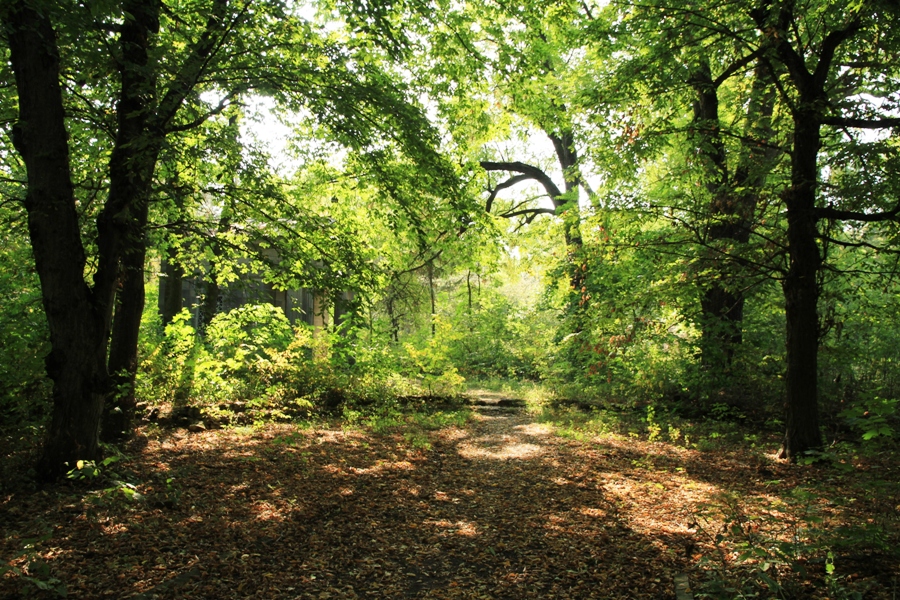
The entire park is interwoven with a network of alleys. Another unique feature is the combination of ornamental trees with surrounding fruit trees, making it both a park and a garden, reminiscent of the ancient Roman Villa Fructuaria.
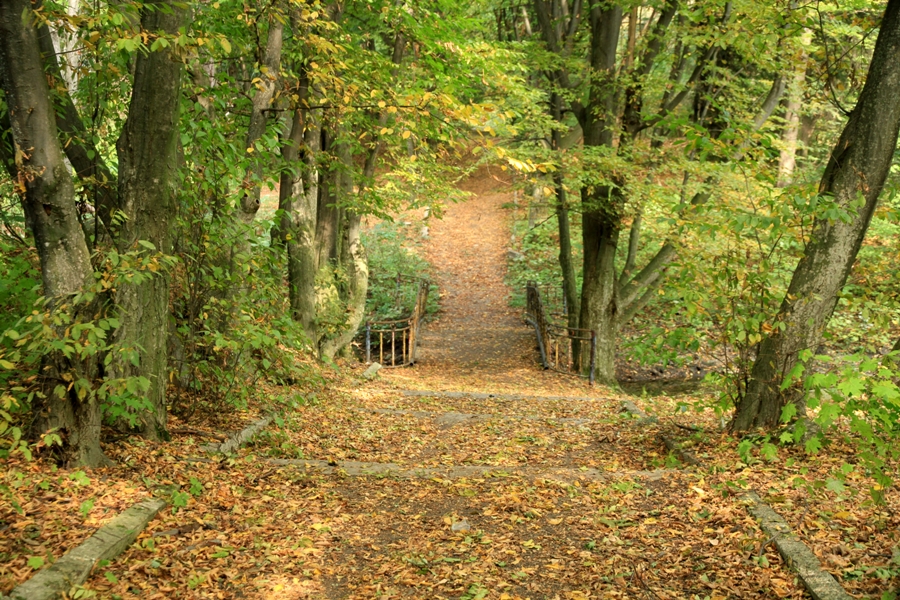
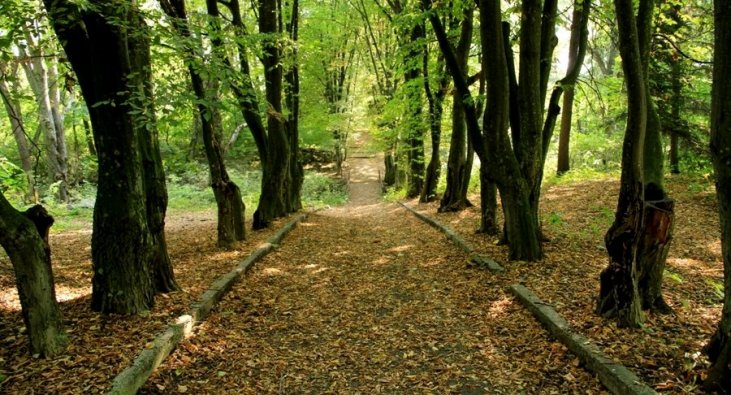
The tomb in Villa Myndyk Park
Now let's return to the park itself and the estate located within it and talk about something sad. During Soviet times, the park and estate were given over to a pioneer camp, and as a result, several completely out-of-place buildings appeared on the estate grounds—residential buildings and a dormitory. Standard, dilapidated sculptures of pioneers and camp counselors are still scattered throughout the park. The pioneer camp has long since closed, and the park and estate are completely abandoned, deteriorating year after year.
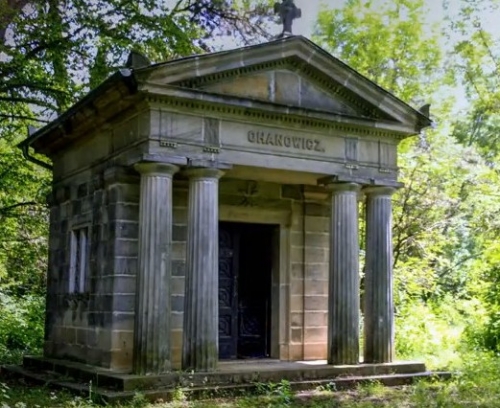
The estate building, like the other structures, is in dilapidation. The necropolis was looted by local residents, prompting district authorities to fill the crypt with concrete. Of the three ponds, only two now exist; the third is overgrown and shallow, and the other two are silting up. The forest in the central part of the park has not been cleared of dead wood for a long time; it is overgrown with bushes and has become almost impassable, resembling a jungle. Of the six springs, only one has been restored. Not a trace remains of the watermill. Naturally, the estate's rich furnishings were also looted; only the load-bearing walls and an ancient wooden staircase leading to the attic remain.
And yet, despite the desolation and neglect, strolling along the park's paths and along the banks of the central pond evokes a special feeling, and lingering on the bridge over the stream brings a sense of peace. Fortunately, the paths and the stone benches that line them have been preserved, preserving this wondrous place's true character, the fruit of the thought and skill of its creators. But leaving this park, one still feels sadness and regret at the lack of appreciation for the legacy left by our ancestors, and that we have never learned to appreciate and preserve the beauty of our land.
Book now!
If you want to book right now, simply fill out the CONTACT FORM and send it to us. We will contact you or help you contact the tourist attraction of your choice.
ANY MORE QUESTIONS?
If you have any more questions or your own opinion, you can share it by writing to us at