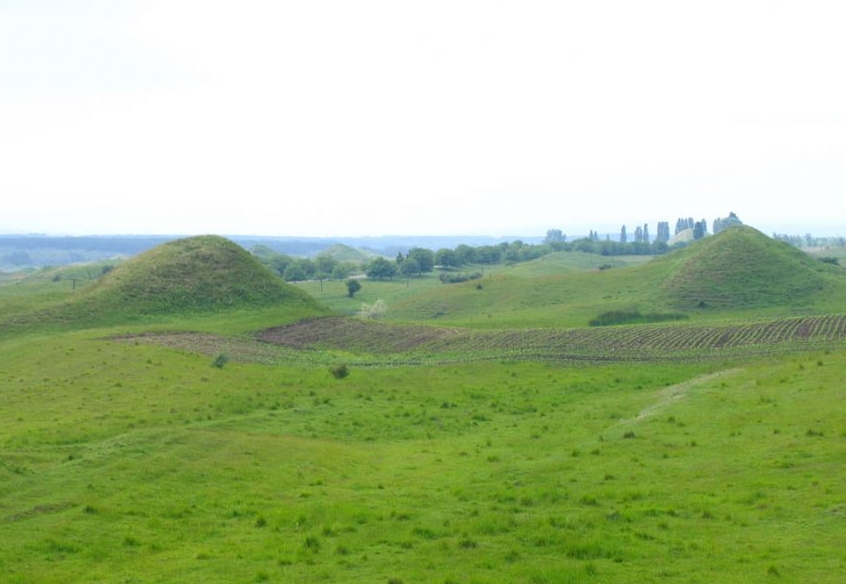
Between the villages of Branesti and Coban, along the road by the Prut River, there is an unusual natural phenomenon called the "Hundred Hills".
This unique phenomenon in the area between the Prut and Dniester rivers is located approximately 220 kilometers from Chisinau.
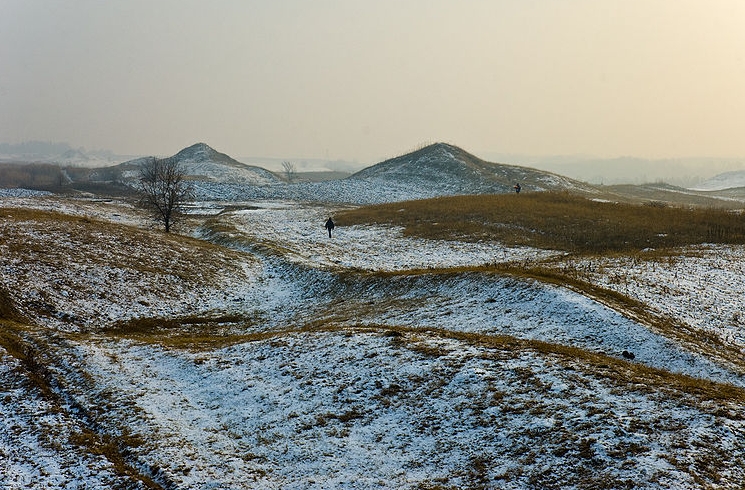
The name "Hundred Hills" suggests there are 100 hills, but in reality, there are significantly more: over 3,500 in total, spread over more than 1,000 hectares. This stretch is over 8 kilometers long and 2.3 kilometers wide.
The hills vary in height from small ones, up to one and a half meters, to taller ones, reaching 30 meters. The largest hill, over 30 meters high, is called "Gypsy Hill."
The first mention of the hills dates back to 1716, in the famous work of Dimitrie Cantemir, “Description of Moldova,” in which Cantemir called them “Centum monticulli.”
The first study of the hills, their description and clarification of the reasons for their appearance were carried out later in 1927.
Some scientists believe that the hills are nothing more than underwater reefs of the Mediterranean Sea, which covered the territory of today's Republic of Moldova more than 20 million years ago.
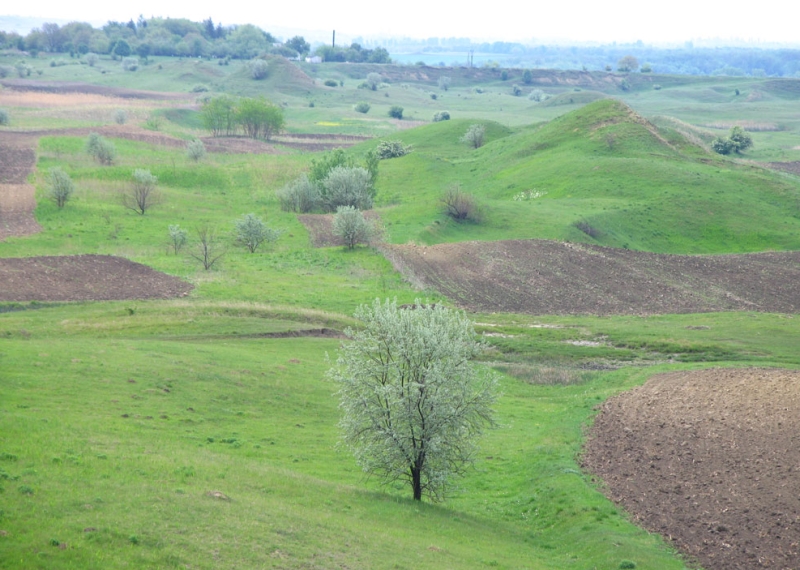
Other researchers argue that this unique natural phenomenon was formed by landslides and avalanches, which repeatedly tore away pieces of the moving rocks that previously formed the slope of the Prut terrace, and that seasonal floods completed the picture, giving the hills their corresponding shape.
In general, the order of the hills has given rise to many different legends, so some believe that the Hundred Hills are the graves of the ancient Geto-Dacians.
Where the hills actually came from, no one knows to this day.
We think we should go by what the locals say about them; they should know better than anyone else. They say the hills appeared long ago, during the time of the Turks, when a battle took place in these areas.
In any case, it is a fascinating mystery and anyone can go and try to solve it.
And if you're not interested in solving charades, then just admire the local nature; believe me, it's worth it.
Indeed, in the area where the Hundred Hills are located, many species of plants grow; here you can find anemones, irises, various varieties of flax, wild carnations, and hyacinths.
From the beginning of spring until August, plants here never stop blooming, the beauty is simply indescribable.
Book now!
If you want to book right now, simply fill out the CONTACT FORM and send it to us. We will contact you or help you contact the tourist attraction of your choice.
ANY MORE QUESTIONS?
If you have any more questions or your own opinion, you can share it by writing to us at