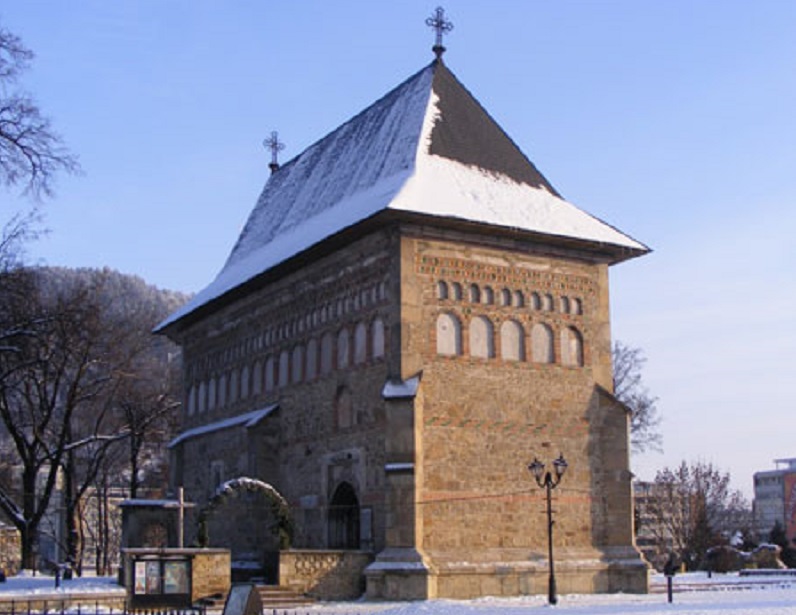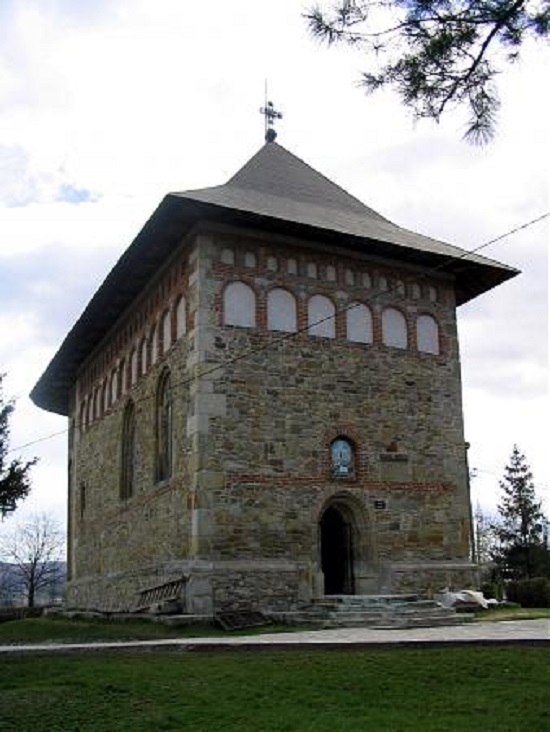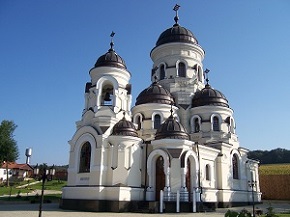
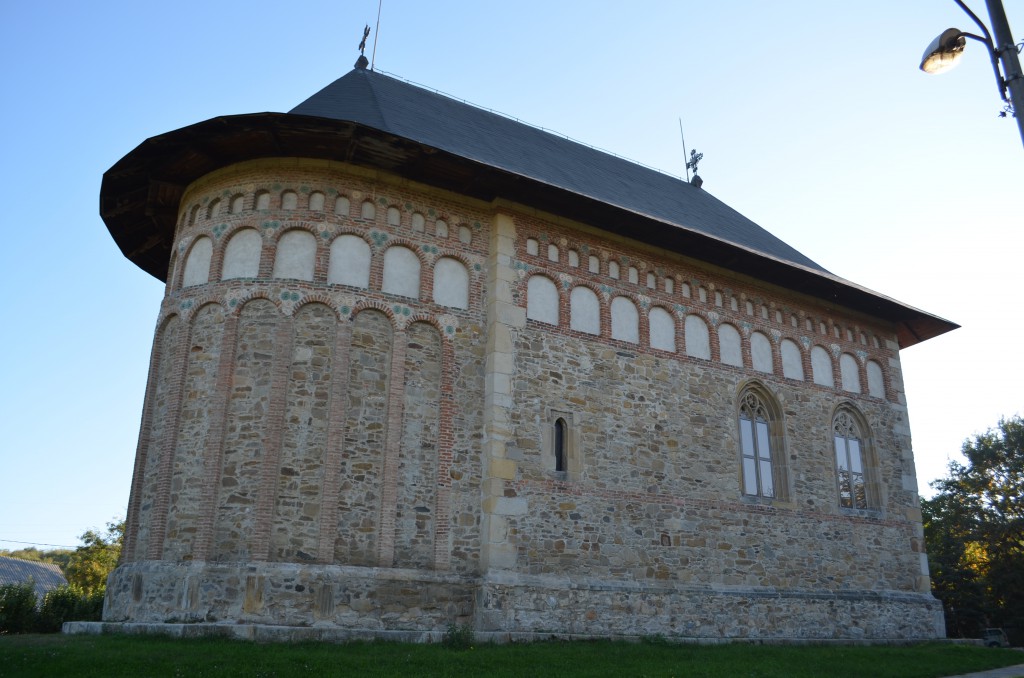
The Church of the Assumption in the village of Borzești was founded by Stefan the Great and his son Alexander in 1493–1494 . This church is one of the most prominent shrines in Moldova, linked to the personal history of the future ruler and his family.
Stephen the Great was born in Borzeşti, and his father, Prince Bogdan , built a church there to commemorate the birth of the heir to the throne. Stephen's childhood was filled with both joyful and tragic events, which left a deep mark on his soul and influenced his decision to build a church.
History of the foundation
As a child, Stefan played under a century-old oak tree , the girth of which could encompass three or four adults, with the children of the local rezeshi. The games often simulated battles between Tatars and Moldovans. During one such game, Stefan and his friends captured the "Tatar Khan"—their comrade Gheorghita (Mitrut). The children, shouting with joy, lifted him into the oak tree, symbolically "executing" him.
However, real Tatars appeared nearby, armed with bows, swords, and poisoned arrows. Gheorghita cried out in terror, "Let me down, the Tatars are coming!"—and at that moment, he was struck in the heart by an arrow. This tragic incident deeply shook Stefan, and later, as ruler, he vowed revenge and perpetuated Gheorghita's memory by building a church on the site of the oak tree where his martyrdom took place.
Thirty years later, Stefan Voivode captured the Tatar khan on the Dniester and sentenced him to the same death. He then ordered the oak tree cut down and a church with an altar dedicated to the Dormition of the Blessed Virgin Mary erected in its place .
At the entrance on the right there is an inscription in Slavic letters that reads:
“Io Stefan Voivode, by the grace of God, ruler of the Land of Moldavia, and my beloved son Alexander built this temple in Borzesti, on Trotuša, with an altar in memory of the Dormition of the Most Holy Theotokos... they began to build in the year 7001 (1493), July 9, and finished in the year 7002 (1494), in the 38th year of our reign, November 12.”
Architecture
The church in Borzesti is a monumental rectangular building , typical of the Moldavian "ship" style:
-
The walls are made of Trotuša river stone , about 1.5 m thick, with brick inserts and glazed ceramics;
-
The facades are decorated with processed stone in the Gothic style , and the corners and frames are highlighted with special finishing;
-
The four domes show the influence of Byzantine architecture and are supported by Moldavian arches;
-
The bell tower is made of oak and covered with shingles (1952);
-
The iconostasis is a wall painted in fresco technique by the monk Nifont in 1775, who also painted the icon of the Savior in the narthex.
The internal proportions and monumental composition make the church impressive, despite the absence of towers.
Interior and painting
-
The interior is decorated with fresco paintings created in the Byzantine tradition;
-
The paintings depict scenes related to the life of Stephen the Great and his historical exploits;
-
The church was originally richly endowed with precious utensils, books and manuscripts , many of which were lost over time;
-
In 1495, Stefan donated the Four Gospels with golden titles, which are now kept in the Athonite monastery of Zograf .
History of restorations
The church has undergone several restorations following fires and earthquakes:
-
1904–1905, 1938–1939, 1951–1952 – restoration work on walls and roof;
-
1952 – covering the bell tower with shingles;
-
1992–1994 – elimination of cracks, strengthening of walls and covering of the roof with copper sheets;
-
2003–2005 – new fresco painting of the interior, including scenes from the life of Stephen the Great.
Today, the church impresses with its monumental paintings , architecture and historical significance, being a 15th-century monument associated with the personal history of one of Moldova's greatest rulers.