June 18 Since 2011, Moldova has celebrated a new professional holiday – Historian’s Day.
The initiative to establish this Day was put forward by the Academy of Sciences of Moldova and the Association of Historians of the Republic of Moldova, and the decision was made by the Government of Moldova on June 8, 2011.
Historian's Day is designated to be celebrated annually on June 18. This date marks an important day for the Moldovan historian community.
On June 18, 1989, the Association of Historians of Moldova was established, which for over twenty years has played an important role in coordinating the work and efforts of historians of the republic.
The Moldovan lands have been inhabited since ancient times; archaeologists have found evidence of human habitation in these regions as early as the Paleolithic era. During the reigns of Alexandru cel Bun, Stefan cel Mare, Petru Rareș, and Vasile Lupu, who left behind a rich cultural and spiritual legacy, Moldova's true renaissance began. As is well known, the state of Moldova was first mentioned in written historical sources in 1359.
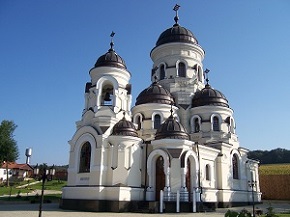
In 1365, the country's ruler, Voivode Bogdan, achieved recognition of Moldova as an independent state with its capital in Siret. Numerous historical monuments have been preserved on Moldovan soil: the medieval Moldovan fortresses of Khotin, Soroca, Tighina, and the White Fortress served as important defense structures; the monasteries of Căpriana , Rudi , Hârbovăț, and Curchi are the oldest Moldovan monasteries; the rock monasteries of Moldova, dating from the 13th and 14th centuries, are also among the oldest architectural monuments.
One of the largest caves on earth has been discovered in Moldova: the Emil Racovets Cave , located in gypsum deposits near the village of Criva in Edinet County. The cave consists of several levels, with a total length of over 89 kilometers.
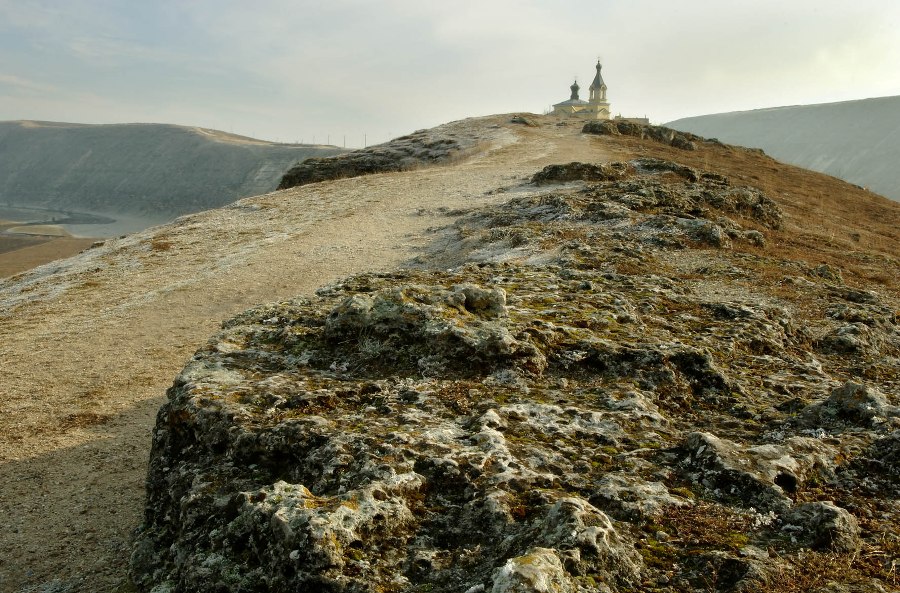
Speaking of historical heritage, it is worth mentioning the Old Orhei museum complex , which preserves evidence of the Dacian civilization, rock monasteries, the remains of the Shehr al-Jedid fortress, built by the Golden Horde in the 14th century, as well as the church and temple of St. Mary, built in the first century.
Two objects of the Struve Geodetic Arc, a unique scientific experiment of the 19th century (1816-1855), which resulted in the calculation of the exact size and shape of the Earth, were discovered in Moldova.
In 2005, the Struve Geodetic Arc was inscribed on the UNESCO World Heritage List under number 1187. Old Orhei is a candidate for inclusion on the UNESCO World Heritage List.